How to Tell If Your Dog Is Sick: A 10-Minute Home Check | Pawssum
Dogs are bad at telling us when something is wrong, and they are very good at pretending it isn't. A dog with a painful abdomen can still wag his tail at the door. A dog with early kidney disease can still eat dinner. By the time most owners say "he's just not himself" something has been building for a while.
When it comes to dogs, that instinct is worth trusting. When we go to see a dog that is "not himself", he is right far more often than he is not.
This page gives you two things. First, a ten minute check that you can do at home with the actual numbers that a vet would be looking at. Second, a clear line between what can wait until the morning and what cannot wait at all.
None of this will replace an examination. But it will help you to describe your dog's symptoms to the veterinarian more effectively.

Ten Minute Home Check
Do this when your dog is calm, not straight after walking or seeing a visitor. Write the numbers down. A single reading is less useful than the same reading taken three days in a row.
1. Count the breathing while he sleeps
This is the single most useful thing an owner can do at home that no one seems to be doing. Wait for your dog to fall asleep or lie quietly. Count the breaths in a thirty second period and double the figure.
For dogs without any heart or lung disease, the normal respiratory rate while asleep should be under 30 breaths per minute. Most dogs comfortably sit in the teens or low twenties. Readings of over 30 breaths per minute while resting are abnormal, according to Veterinary Cardiac Services Australia.
Ring your vet the same day. If your dog has a heart murmur or heart disease, this rate is the sign the vet prescribed for you to watch for. It should not be waited until the following day. The effort your dog is exerting while breathing is also important to note; if you observe that the belly is heaving in contrast to the chest rising with each breath, this may be an indication of laboured breathing.
Resting rate: panting after a run is normal. Panting in a hot room is normal. But if your dog has a high resting respiratory rate when cool and sleeping, that's cause for concern.
Why it matters: because rising resting respiratory rates are one of the first clinical signs of fluid building up in the lungs.
2. Look at the gums
Look at the gum that is opposite the upper canine tooth. Healthy gums are a bubblegum pink.
Press your fingertip against the gum for a second and release. The gum will initially turn white and then refill with blood. The time it takes for the gum to refill with blood is important. Normally it should take one to two seconds for the gum to refill with blood. This is what is considered normal by the Perth Vet Emergency and the Merck Veterinary Manual.
What the colours mean
|
Gum colour |
What it can point to |
Urgency |
|---|---|---|
|
Pink, refills in 1 to 2 seconds |
Normal circulation |
Reassuring |
|
Pale or white |
Blood loss, anaemia or shock |
Emergency, now |
|
Blue, grey or muddy |
Not enough oxygen getting around |
Emergency, now |
|
Yellow |
Liver problems or red cells breaking down |
Same day |
|
Brick red with fast refill |
Fever, heat stress or early shock |
Same day |
|
Refill slower than 2 seconds |
Poor circulation |
Same day |
Some dogs have naturally pigmented black gums. In this case, check the colour of the gums inside the lower eyelid or the ear flap.
3. Feel the heartbeat
Place your flat hand on the left side of the chest behind the elbow or on the femoral artery on the inside of the back leg. Count the beats in 15 seconds and multiply by four.
Resting rates will vary with size:
- Large breeds: 60 to 100 beats per minute
- Small and medium breeds: 100 to 140 beats per minute
Puppies typically have higher resting rates. At Perth Vet Emergency, resting rates for puppies were quoted as being between 70 and 160 beats per minute. These are rough estimates, but the irregularity or deviation of the rate from the dog's normal resting rate is what matters most.
4. Check hydration
There are a couple of tests that can be performed to assess hydration. Firstly, lift the skin between the shoulder blades and allow it to fall. If the dog is well hydrated, the skin will fall back into place rapidly. If the skin takes two or more seconds to fall back into place, the dog may be dehydrated. Secondly, check the moisture on the gums. Well hydrated dogs will have gums that feel slippery to the touch. Gums that feel dry or tacky to the touch suggest dehydration.
For both older dogs and thin dogs, skin elasticity decreases naturally, so the skin test will not be as reliable. Use the gums instead.
5. Take a temperature, if you can
A dog's normal temperature ranges between 37.5 and 39.2°C (per Perth Vet Emergency and Lort Smith). Use a digital thermometer and a smear of lubricant to administer the thermometer about two centimetres into the rectum. It will take under a minute to register the dog's temperature.
Do not use ear thermometers made for humans. A cold nose does not mean anything.
Any temperature above 39.4°C indicates a fever. Above 41°C is an emergency situation known as heatstroke. Administer cooling measures before you leave the dog at home and continue cooling the dog during transport to the veterinarian's office. See the section on heat for ways to cool the dog.
The changes that matter most
Numbers are useful. Patterns are often more useful to the person who knows the dog and the vet who may encounter the dog for the first time.
Eating and drinking. While skipping a meal is common for dogs, skipping two meals warrants the owner's attention. If a dog suddenly begins to drink more water or empties its water bowl when it used to leave the bowl filled, the dog may be suffering from an issue that can be assessed with a blood test.
Increased thirst is one of the first indications of kidney disease, diabetes and Cushing's disease, all conditions that may be dismissed with the thought that the dog is just unusually thirsty during hot weather.
Toileting. Any abnormal toileting habits warrant the owner's attention. Straining to empty the bladder, noticing blood in the urine, producing less liquid than usual, needing to go more often, having an accident in the house (something that did not happen for years with that dog) or not producing any urine at all are all abnormalities in a dog's bathroom routine. If a male dog strains to urinate but does not successfully release urine, this is an emergency condition.
Energy. Not just sleeping more, but changes in the energy throughout the day. Dogs who normally run around and play all day may not show up for the door any longer. Or who used to finish their walk may now be reluctant to even begin theirs. Changes in sleeping habits may also be noted. We have written separately on why dogs may become lethargic.
Movement. Difficulty getting out of bed or when going down stairs. Difficulty jumping into the car. These are all classic signs of arthritis in dogs, though many owners simply label this as "getting old". While age does not diagnose arthritis, there are treatments available for relief of the discomfort a dog may feel.
Smell. Bad breath is never just bad breath in dogs. It is usually a sign of dental disease or kidney trouble. Any strange smell coming from the ears, skin or wounds should also be inspected.
Coat and grooming. A dull, greasy or flaky coat is a sign of something within the body of the dog, not something that is skin deep.
Personality. A dog who used to jump at the sound of a noise may not exhibit such a jump any longer. A dog that was never grumpy may suddenly exhibit such behavior. A dog that used to follow their owners may suddenly begin to act clingily towards them. A dog that snapped when touched in a certain spot may not do so any longer. Pain can change a dog's temperament just as easily as it can change the way they walk.
Posture: what a dog's body position can tell you
Some positions of the body are recognised as clinical signs of illness, not folklore. Three positions are worth knowing.
The prayer position
The prayer position is when the dog's chest and front legs are on the floor and the rest of the body is in the air. This position is not temporary but seems to be held for a while. This posture is a sign of pain in the front part of the abdomen. Australian vets tend to see this position as restlessness in dogs who cannot find a comfortable position, often with a hunched back and growling when their bellies are touched (Lort Smith). There are several causes of this sign, including pancreatitis and various surgical conditions. These dogs need to be seen as soon as possible. When lifting a dog who is in this position, one should wrap their arms around the dog's legs instead of placing their arms around the dog's body to avoid further pressure on the abdomen.
The breathing stance
A dog struggling to breathe will stand or sit, rather than lie down. They will have their elbows out away from their body, and their head and neck will be stretched out. Lort Smith also lists this same picture, showing the dog with it's neck outstretched and showing effort at breathing at the belly rather than the chest, as well as pale gums. If your dog is not lying down and is exhibiting this behavior, you should go immediately with your dog and handle them as little as possible, since the stimulation can make their breathing difficulties worse.
A dog who cannot get comfortable
Your dog will lie down and get up repeatedly, and may even refuse to lie down at all. If your dog is exhibiting restless behaviors and has a bloated body with retching that does not result in eating, treat this as bloat (GDV) until a veterinarian rules it out, one of the few conditions that require immediate attention.
Most of the risk of deep chests is with large breeds: Great Danes, German Shepherds, Weimaraners, Dobermanns, Irish Setters, Boxers, and in Australia greyhounds (NSW Greyhound Welfare and Integrity Commission). Male dogs appear to be twice as likely as females (Animal Emergency Service). The belly may not be visibly swollen, so retching and distress signals indicate the need to go to the hospital immediately. Do not feed the dog, do not provide water, do not use any home remedy. Have someone call the hospital while you are en route.
Compulsive circling is a different problem altogether. A dog that compulsively circles in one direction (often with a head turn) indicates neurological issues (Queensland Veterinary Specialists). This is not related to deep chested breeds and is a separate issue that also requires emergency treatment.
We have gone into this in more detail on what your dog's sleeping position can and cannot tell you.
When to call a vet tonight, and when it can wait
Call now, do not wait for morning
If your dog is exhibiting any of the following, take them to a veterinarian immediately. These are the conditions that are treated as emergencies at the vet clinic:
- Difficulty breathing
- A dog who will not lie down due to difficulty breathing
- Pale, white, blue or grey gums
- Collapse
- Loss of consciousness
- Seizure
- Repeated seizures
- Pressing their head against a wall or piece of furniture and not being able to release it
- Hard, swollen belly
- Retching at the belly but bringing up nothing
- Straining to urinate but not successfully urinating
- Uncontrolled bleeding
- A snake bite (even if the dog later seems to recover from the bite)
- A suspected case of paralysis tick (especially if the dog has a wobbly back end or strange bark)
- Weakness in the back legs
- Unable to stand on their hind legs
- Circling in one direction when the dog should not be doing this
- A head turn when the dog should not be turning its head
- Heatstroke
- Poisoning
- Any trauma (even if the dog seems fine after being hit by a car)
- Obvious severe pain
These need a hospital with anaesthesia and surgery. Go to your nearest 24 hour emergency centre rather than waiting for a home visit; ring ahead while you drive to the centre so that they are ready for you when you arrive, rather than driving to somewhere that is closed.
Same day, but not a 2am emergency
- Repeated vomiting or diarrhoea over more than 12 hours
- Not eating for more than 24 hours
- A jump in thirst or urination
- Limping
- Yellow gums or yellow tinge in the whites of the eyes
- A new lump or one that grows or changes in size
- Sleeping respiratory rate consistently over 30
Book in the next few days if your pet has:
- Bad breath or tartar buildup
- Poor coat condition or frequent itching
- Stiffness or slowing down with age
- Slow weight change
- Anything that has been niggling at you for a fortnight
Four things Australian owners should keep front of mind
Poisoning
Poisoning, any hour of the day, is covered by the Animal Poisons Helpline, free, staffed by veterinary toxicologists, and available 24 hours a day on 1300 869 738. Ring them on the way rather than instead of going to the vets.
Paralysis ticks
Paralysis ticks are an issue for the east coast from north Queensland to eastern Victoria. A second tick species covers central and eastern Victoria, as well as central and eastern New South Wales, the ACT and Tasmania. So if you live as far south as Hobart or Ballarat, ticks could affect you (2024 Australian Guidelines for Tick Paralysis). Ticks will also travel on your dog so be sure to mention any trips you've taken recently.
Early signs of tick paralysis include changes to the dog's bark, wobbliness in the back legs, and even vomiting or gagging. These can often be mistaken for a sore throat.
Three things dog owners get wrong about tick paralysis, and each of them costs dogs:
- Taking away food and water from the dog before you leave the premises. The dog cannot protect its airway from inhaling any food it swallows while suffering from tick paralysis. Aspiration pneumonia is the most common cause of death in dogs with tick paralysis (Sydney Animal Hospitals).
- Keeping the dog as quiet and cool as possible while the dog is suffering from tick paralysis. Do not allow the dog to exercise or get too excited.
- Many people think that if you find and remove the tick, the dog will recover from tick paralysis. However, the dog's condition will continue to worsen for hours, sometimes days, after the tick is removed. Go find and remove the tick even if you find it difficult to do so. Also, if you do not find the tick on the dog, it does not mean the dog does not have tick paralysis. Ticks can hide in the dog's fur between its shoulder blades, under its chin and around its head.
Our paralysis tick guide covers what to look for.
Snake bites
Snake bites often have no visible wound. Weakness, collapse, dilated pupils, vomiting or wobbliness following being in the long grass indicates a bite and requires attention.
There is a trap with paralysis ticks, dogs that are bitten often collapse and then seem to get better. In a case series from Queensland 40% of dogs with paralysis ticks appeared to recover from the initial collapse only for the symptoms to worsen until death hours later. If your dog collapses from a suspected snake bite, even if he seems fine again, take him to the vet.
Carry your dog on the way to the vet. Do not wash the bite site as the vet will need to test for the presence of venom to identify the snake that bit your dog. Do not apply a tourniquet, do not cut the dog's leg or attempt to suck the poison out of the wound. Do not attempt to find the snake that bit your dog. If your dog was bitten on a leg lower than the one you are holding and you are some distance from the vet, apply firm pressure to the lower leg to restrict the movement of the venom through the leg. Call the vet clinic ahead of time to request antivenom for your dog. (RSPCA Australia, Animal Poisons Helpline)
Heat
Dogs mainly cool themselves by panting, and panting is less efficient in high humidity. Brachycephalic breeds, older dogs and overweight dogs are at much higher risk. In Australia the common causes are walks on hot days, yards without shade or hot pavement, not just cars.
If your dog is panting heavily with red, bright gums, drooling or vomiting on a hot day, this is an emergency. Start cooling the dog while still at home, using cool (not ice cold) water to wet the dog down, avoiding the face. Use a fan or open car window to help the air move over the dog's wet coat. Australian guidance is against the use of ice baths and ice directly on the dog's skin (RSPCA Australia, Animal Emergency Service). Offer small sips of water to the dog, but do not force the dog to drink. Lastly, ring the dog's veterinarian clinic while completing these steps at home.
Poisons, and the three that put Australian dogs in emergency rooms
The cane toad lives in Queensland, coastal New South Wales, the Top End and the Kimberley and can kill an average dog in about fifteen minutes. Signs of poisoning include drooling, foaming at the mouth, bright red slimy gums and tremors. Wipe the inside of his mouth with a damp cloth, wiping outwards from the gums to the corners of the mouth until the slime is gone (ten to twenty minutes). Do not hose water into his mouth (he can inhale it, Animal Emergency Service).
There are many poisons in Australia's rural and peri-urban areas using the poison 1080 in baits. Snail bait is one of the most common causes of poisoning in Australian homes and results in tremors and seizures within the hour. In either case, ring 1300 869 738 while you drive.
Do not make him vomit unless the veterinarian tells you to. Take the packaging of the poison with you when you go to the vet's office.
Why an at-home examination often finds more
A lot of what a veterinarian reads into a consultation is the behaviour of the dog. Dogs that are stiff at home are prone to energy surges at the clinic. Dogs in pain commonly hide that from a stranger. Dogs with fast breathing at rest have likely traveled to the clinic in a car for several minutes before the vet even gets a look at the dog's breathing.
At home the dog is left alone on his own floor. He can lie in the way that he normally does. The owner remembers all the things about the dog that they would never mention in the clinic setting.
Pawssum vets carry the same diagnostic equipment as a veterinary clinic and can perform blood tests on your dog at home. Most diagnostics can be performed at your own lounge room.
If your dog is unwell and you would prefer that he does not travel in the car to the vet clinic, a home visit can be booked or the costs of a mobile veterinarian checked beforehand.
Frequently asked questions
How do I know if my dog is unwell or just tired?
Tiredness after exercise will pass with rest. Illness does not. If your dog is flat but seems energetic the following morning, he was just tired. If he is flat for two days running or when there is no obvious reason for lethargy, take a resting count of his breathing rate and check his gum colour. If either of these are abnormal, he needs to be seen by a veterinarian.
What are the first signs a dog is unwell?
Appetite, energy and toileting are the first to change, usually. Most dog owners will notice that their dog seems not himself before they notice any specific sign of illness. Changes in drinking, a new smell and reluctance to do something they normally enjoy are the other early signs of illness in dogs.
Can I check my dog's temperature without a thermometer?
You can't. A warm or dry nose tells you nothing of importance. Warm ears could be warm from exercise or from the environment. The only way to establish a real temperature is with a digital thermometer used rectally. All else is guesswork.
How long should I wait before taking my dog to the vet?
If any of these signs are apparent, there is no waiting at all. Otherwise, the general rule is 24 hours for dogs who are off their food but otherwise healthy and bright, but the same day for dogs who display repeated vomiting, diarrhea, or changes in breathing or drinking.
Three exceptions to the 24 hour rule. First, puppies (especially toy breeds) should never go a day without eating. Second, dogs in the tick paralysis areas will need to have their appetite checked immediately if they are off their food, loss of appetite is one of the early signs of a tick paralysis infection. Finally, diabetic dogs who won't eat need to be called about their medication doses. This rule of 24 hours has three exceptions, and a phone call to the veterinarian costs nothing.
My dog is sick but still eating. Is that reassuring?
No, it's less than people assume. Many dogs with significant disease will continue to eat until they are very unwell. The presence of an appetite is not a sign that there is nothing wrong with your dog.
What does it mean when a dog hides or goes off on his own?
It means that your dog is in pain or is unwell in some way. This is a behaviour that reflects a cat's instincts as they feel threatened and vulnerable. It is a normal behaviour for a cat but less common for dogs.
Is panting a sign my dog is sick?
Panting can be a sign of excitement, exercise or heat. If your dog is panting at rest in a cool environment and the panting does not settle, it could be a sign of illness. Call the vet on the same day.
By Dr Sarah webb - BVSc, registered veterinarian
Last updated on 30th September 2026
About the author

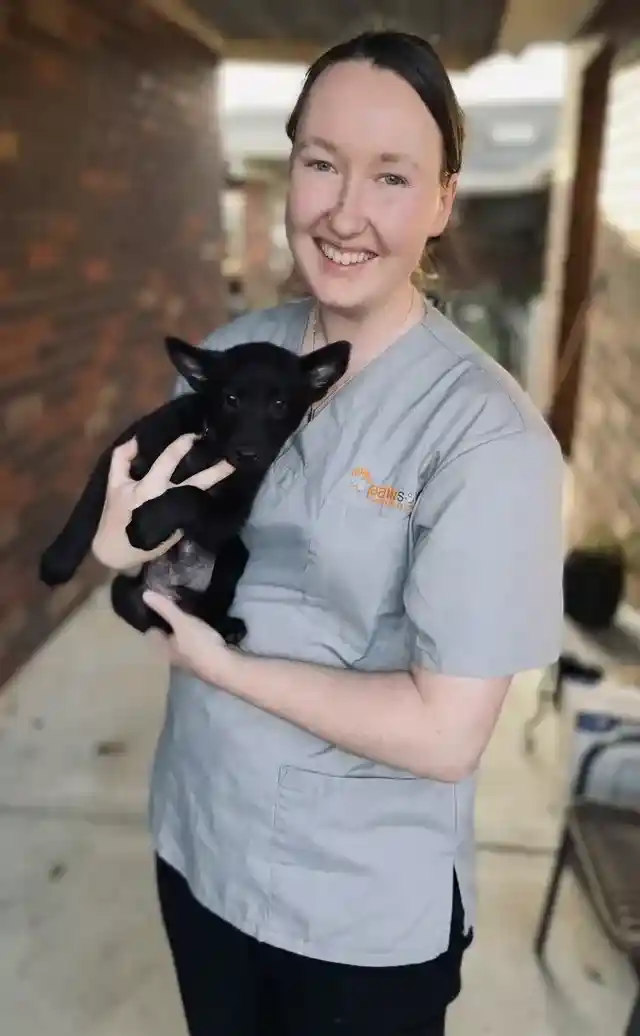
Dr Sarah Webb is a Melbourne-based veterinarian and Charles Sturt University graduate with experience across mixed practice, locum work, and mobile veterinary care. She has a special interest in poultry and backyard chicken health, alongside her work supporting dogs, cats, and other animals. Dr Sarah brings a practical, compassionate approach to veterinary care and is also passionate about mental health and wellbeing within the veterinary profession.
Our company
Open 7 days a week from 6:00am to 11:00pm including public holidays
© 2026 Pawssum Pty Ltd. All rights reserved.