Sleeping Positions When Sick: Dog & Cat Guide | reddit
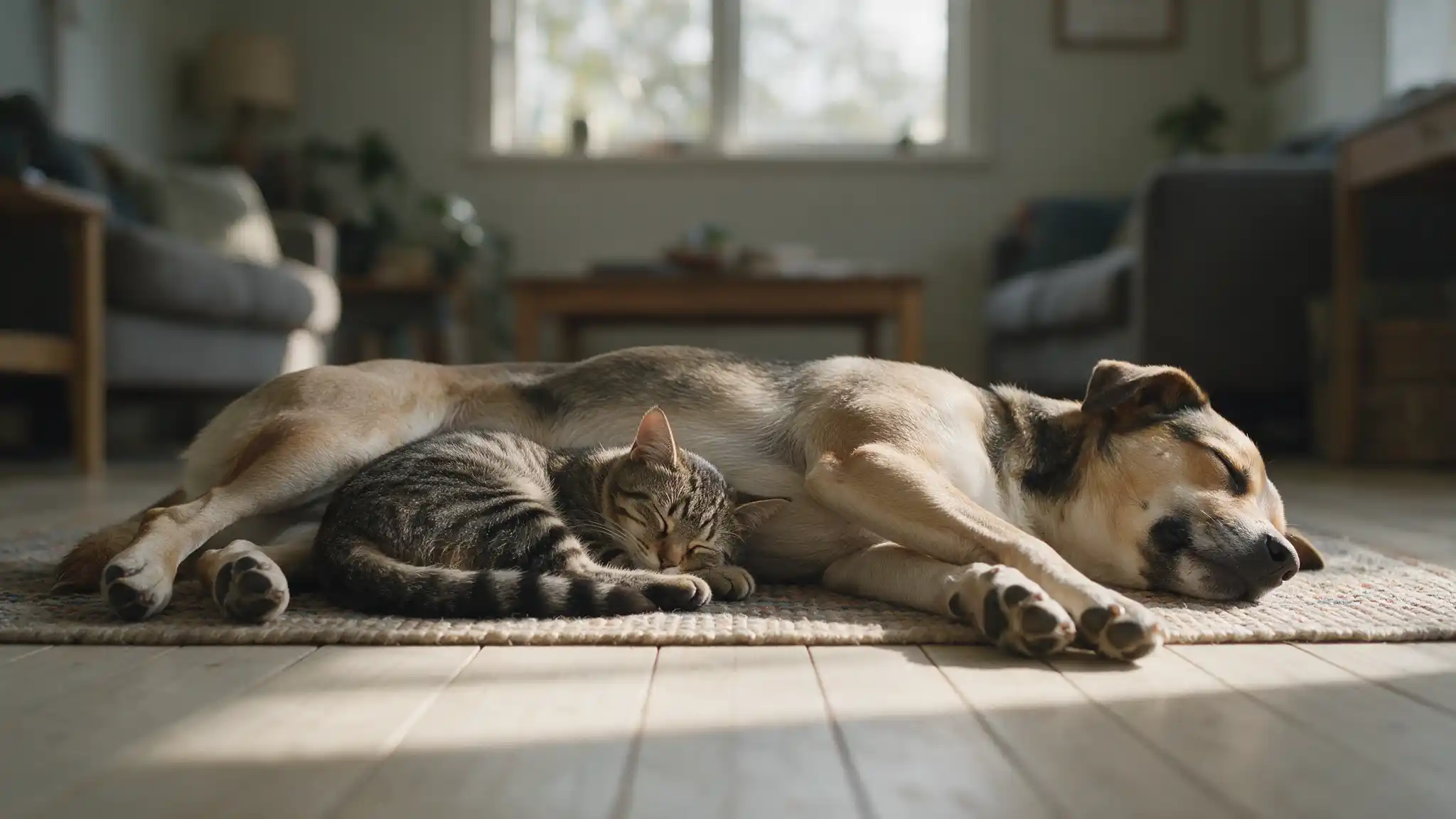
Search this topic and you will find a lot of pages that tell you that when a dog is curled up tightly it means the dog is feeling anxious, that when a dog is on its side it means the dog is feeling content, and that if a dog is sleeping with its paws in the air it means that the dog feels safe. Much of this is invented. Dogs and cats change positions in their sleep dozens of times a night to accommodate the changing temperatures of their sleep areas.
A few positions are recognised clinical signs to vets. These positions mean something to vets and four of them indicate an emergency.
Here is the honest version of this information on dog body language and what it means, which positions mean something to dogs and cats, and what you should do about it.
The positions that genuinely matter
1. The breathing stance
The dog will not lie down. Instead, he will stand or sit with his elbows pushed out away from his body, his head extended and his weight on his hind legs. He may also be breathing through his mouth and will resist being made to lie down.
Look at the dog's belly as well as his chest. Heaving of the belly only indicates laboured breathing. If the gums are pale or blue-tinged, this is an emergency (Lort Smith).
What it looks like in a cat: The cat will be in a crouched position on all four paws, with the chest lifted from the ground, and will not settle in this position. Any open-mouth breathing in a cat is an instance of this behaviour.
Why it happens: The cat is opening its airway as wide as possible. According to the MSD Veterinary Manual, the posture of a dog in instances of this breathing behaviour is to stand with the elbows abducted, the back arched or the dog's weight shifted caudally onto its hindlimbs, and the head and neck extended. In cats, the description is of the cat in a crouched position on all four limbs, with the sternum slightly elevated.
The animal is working hard to breathe, it could be fluid around the lungs or heart failure or airway obstruction.
Emergency care, now, whichever hour it is. Try to find them somewhere cool and well ventilated, but minimize handling. Australian emergency hospitals tell us that stimulation tends to make breathing difficulties worse (Lort Smith). Try to find a carrier for the cat, putting the cat beside the dog and letting it walk in if they will is best; do not fight with a cat into walking. Ring the hospital while someone else drives.
2. The prayer position
This position has the dog's chest and front legs on the ground with the back up in the air, exactly as in the play bow position, only the dog does not go anywhere and possibly returns to this position again and again.
Why it happens: it takes pressure off the front part of the abdomen.
What it means: it is a sign of pain in the front part of the abdomen. Australian vets more often describe this as restlessness and an inability to get comfortable; often with a hunched or arched back, belly guarding and growling when the abdomen is touched (Lort Smith). Pancreatitis is one of the causes of this restlessness but not the only one.
What to do: as soon as possible, not tomorrow. If it is caused by surgery, treatment has to happen soon. Go straight to an emergency hospital if the belly is also distended and hard to the touch, if the dog is retching but unable to vomit, has pale gums, is collapsing or showing severe pain. When lifting the dog, put your arms around its legs instead of placing them between its legs to avoid putting pressure on the abdomen. The distinguishing feature between this and dogs trying to stretch is the duration of the restlessness. A stretch lasts only a second or two. However, the restlessness will be sustained.
3. The hunched crouch, or meatloaf position
Look like: a cat in this position with all four paws beneath its body, with the head lowered and tucked into the shoulders, and the eyes half-closed. This is the most common position for cats, hence the name "meatloaf," but dogs can also adopt this pose.
Why: this position is a guarding posture. It minimizes the movements of the dog and is used to protect a sore abdomen.
What it means: this position alone can mean nothing. However, if a cat frequently adopts this pose, and exhibits other behaviors like reduced grooming, hiding from humans, not eating, low head carriage, or squinting at objects, the cat may be unwell.
4. Head pressing
Head pressing is the behavior by which a dog stands in a position in which the top of its head is against a wall, a corner or a piece of furniture, and holds that position. The dog does not scratch or rub at the affected area; instead, it pushes against the wall, often for long periods of time, and the odd behavior is generally recognized by owners as abnormal.
Head pressing is a sign of forebrain function. According to Australian neurologists, behaviors like head pressing, head turning, circling, seizures and changes in mentation are all classic indicators of forebrain diseases (Queensland Veterinary Specialists). Possible causes of head pressing include liver disease, toxicity and brain lesions.
Emergency, now. This is not a wait and see situation. If there is any chance that your pet has eaten something toxic, the Animal Poisons Helpline is free and open 24 hours on 1300 869 738 and can advise you on the way to the vet clinic.
5. Restlessness and not settling
It is common for dogs to circle before they lie down in a comfortable position. However, if a dog is unable to lie down and circulates in sleep, this can be a sign of an underlying illness.
Circling has a second meaning which relates to neurological issues for pets. If a pet circles in one direction with a head turn, they may be exhibiting neurological issues. This is an emergency situation and requires immediate attention.
What it means: This symptom alone means discomfort. However, if a dog also has a swollen and hard belly and continues to retch up nothing, he or she has bloat, or gastric dilatation and volvulus. This is one of the few conditions where the difference between going to lay down and going to sleep now versus in an hour can make the difference between life and death.
What to do: If the dog is laying in this position (distended, hard belly, retching up nothing), take the dog to the nearest emergency hospital right away. Have someone else call the hospital over the phone while you are en route to the hospital. Do not give the dog any food or water, do not attempt to release the gas, and do not give any home remedy to the dog.
Deep chested breeds are at risk for bloat. The breeds at risk are Great Dane, German Shepherd, Weimaraners, Dobermanns, Irish Setters, Boxers, and in Australia, greyhounds (NSW Greyhound Welfare and Integrity Commission). Male dogs are twice as likely as females, and the risk increases with age (Animal Emergency Service). While the belly is not always visibly swollen, retching and distress are indications of bloat.
Otherwise, it is possible to treat the dog with the same day care plan, with one important exception. In a cat, particularly a male cat, restlessness and trips to the litter tray may be a sign of a urethral blockage. blocked-cat is an emergency (Animal Emergency Service). The signs of a urethral blockage are straining to urinate that yields only drops of urine or none at all, crying in the litter tray, and licking at the back end of the cat. The trap shots are that owners think it is constipation, or that the cat is outdoor cat and does not exhibit any of these symptoms. Thus, a cat showing these signs is likely to be hiding from the litter box. A cat that was exhibiting these behaviors but has stopped, and is lying flat and quiet, is in trouble and requires immediate attention. See our cat guide.
6. Sleeping somewhere new
Not a position at all, but a location. Under the bed. Behind the couch. In a wardrobe. On the cold bathroom tiles. Away from the family.
This is one of the most reliable indicators of pain in a pet who has never slept in this way before. In cats, who spend most of their lives in a state of hiding, sleeping in hidden locations is a sign of discomfort or illness.
One distinction worth making in a cat is that sleeping in a location that is new but also lower in height than sleeping spots the cat is used to, off the wardrobe, off the back of the couch, onto the floor, indicates a problem with the cat's mobility. Sleeping in a location that is both new and hidden, such as under the bed, behind the couch, in a wardrobe, indicates pain, nausea or fever (RSPCA Australia).
Weak in the back legs, or unable to hold any position
Signs of weakness in the back legs or inability to hold any position will manifest as the dog or cat appearing wobbly on the hind legs, struggling to stand from lying or sitting down positions, and may also be lying on their side yet unable to right themselves. The bark or meow may sound slightly different and breathing may be fast or laboured.
If you encounter a dog or cat who displays these signs, and who is otherwise not behaving as they typically do for you, it is important to get them checked out that day in a cat, and within a day or two in a dog. Sooner if they are also not eating.
In coastal Queensland and coastal New South Wales, weakness in the legs and inability to stand is most likely caused by paralysis tick until proven otherwise. Tick season occurs from August to November in the south of Australia, but is present year round in the north (Animal Emergency Service). However, if the paralysis was not caused by ticks, the alternative condition to consider is snake envenomation, which typically presents as the animal collapsing, then recovering to the point of being able to walk normally, only to worsen over the following days (RSPCA Australia).
What to do in case of emergency, now:
- Take away their food and water. A paralysed animal cannot protect its airway and can inhale what it swallows.
- Keep them still, quiet and cool. Carry them instead of letting them walk.
- Look for a tick on the way but don't delay in getting them out of here to do that. Go even if you find and remove one. They continue to deteriorate for hours or days after the tick is removed.
- If you suspect a snake bite, do not wash the area, do not apply a tourniquet and do not go looking for the snake. Ring ahead to the clinic to tell them there is a snake bite and they need antivenom.
- Even if the pet seems to have recovered, go anyway.
The claims that are not true
Worth saying plainly, because these fill most of the search results. Most of it is invented, and the rest is based on studies that haven't been performed on pet dogs. There is a general idea in research literature that an animal resting in a position from which it can quickly stand on observing that it is under stress. While this has not been measured in dogs, it is unlikely that it can be used to determine the state of any individual dog.
A dog curled up tightly is cold, anxious or unwell.
Curling up conserves body heat and keeps the dog's abdomen from being exposed. This is one of the most common sleeping positions of dogs when they are resting normally. Plenty of healthy dogs will sleep in this position every night of their lives. However, this by itself means nothing.
A dog sleeping on its side is a happy dog.
At least, that is the position of a dog that is comfortable and relaxed. However, it is also the position to which a collapsed dog settles. Instead of looking at where the dog is, the question that should be asked is whether the dog can get out of that position. If a dog or a cat is lying on its side and unable to right itself, this is an emergency. Likewise, if a dog collapses and then later rights itself, this can also be an emergency, as with the envenomation of snakes in Australia.
Paws in the air means your dog feels safe.
Dogs do like to lay with their paws in the air as it allows them to cool themselves. Dogs only take the time to lie in this position if they are relaxed enough to. It is a sign of a healthy dog with nothing wrong with it. However, this position when dogs are sleeping is of little use to dog owners in determining the health of their dog or any other information about their dog's wellbeing. While dog body language does contain signals of the dog's emotions, the RSPCA Australia dog body language guide explains the signals of a dog's emotions. However, this also pertains to the dog's body in an awake state, not while sleeping.
One Australian caveat on heat. Seek cool surfaces is normal. A dog panting heavily and not able to settle and find cool surfaces to lie upon when it is hot is an indication of heat stress, an emergency. Apply cool (not ice cold) water to the dog and go.
"A dog sleeping at your feet is guarding you."
Dogs sleep beside their owners as they are social animals. There is no support for this idea in terms of health.
"A change in sleeping position always means illness."
A dog may change sleeping positions with the aging of the dog, change of the weather, purchase of a new bed, or arthritis in old dogs.
Arthritis is a common and under-recognised explanation for the lameness of older pets. Greencross states that osteoarthritis is present in 80% of senior dogs and cats, but also affects younger pets as well (Greencross Vets). Symptoms of arthritis include stiffness, difficulties getting up, and reluctance towards stairs or jumping. Cats may also be observed using fewer spots in the house for grooming (RSPCA Australia). While arthritis is a slow change in the body, it is important to investigate the condition in relation to the lameness.
The general rule of thumb for lameness is that position tells you very little. Change tells you something. Change plus another symptom tells you a lot.
What to look at instead
If you are worried enough about your pet to be considering sleeping positions, there are four checks you can do that will tell you a great deal about their health, all in ten minutes.
Count the sleeping breathing rate. Wait for the pet to be properly asleep. Count the rise and fall of the chest, one rise and fall is one breath. Count thirty seconds and double the number. A healthy dog or cat should be breathing under 30 breaths per minute while asleep, with most comfortably within the teens (Veterinary Cardiac Services Australia). Going over 30 breaths per minute while sleeping is an indication of abnormal breathing, the effort required to breathe deeply while sleeping is part of the examination. This one check alone is worth more than any amount of consideration of sleeping positions.
Check the gums. They should be pink and moist, if you press on them, the colour should come back within 1 to 2 seconds (Perth Vet Emergency and the Merck Veterinary Manual). If the gums are pale, white, blue or grey, this is an emergency.
Watch the appetite. If your dog hasn't eaten for 24 hours, a vet visit is required. If your cat hasn't eaten for 24 hours, a vet visit is required that day as cats will break down their fats to use in their livers which can lead to hepatic lipidosis in a couple of days' time (Sydney Animal Hospitals).
Take a video. If you're not happy with your pet in a particular position, take a video of them in that position for ten seconds. This is the single most useful tool that you can give to your vet when they arrive, most animals will stop doing whatever behaviour they were engaged in when the vet walks into the clinic.
Quick reference
|
What you are seeing |
How urgent |
|---|---|
|
Will not lie down, elbows out, neck stretched |
Emergency, now |
|
Cat crouched, chest lifted, mouth open |
Emergency, now |
|
Weak in the hind legs, wobbly, or cannot stand |
Emergency, now. Think paralysis tick in coastal QLD and NSW |
|
Collapsed, then seemed to recover |
Emergency, now. Think snake bite |
|
Lying on the side and unable to right itself |
Emergency, now |
|
Head pressed against a wall |
Emergency, now |
|
Circling compulsively in one direction, or a head turn |
Emergency, now |
|
Restless with a hard, swollen belly and retching |
Emergency, now |
|
Emergency, now |
|
|
Prayer position held repeatedly |
As soon as possible, not tomorrow |
|
New hunched meatloaf posture with not eating |
Same day |
|
Sleeping somewhere new and hiding, out of character |
Same day in a cat, within a day or two in a dog, sooner if also not eating |
|
Book a check, possible arthritis |
|
|
Curled up, on their side, or paws in the air, otherwise well |
Normal |
Where to go from here
For the full home check including heart rate, temperature and hydration, see how to tell if your dog is sick and how to tell if a cat is unwell.
First, the important part. The emergencies on this page, breathing distress, hard swollen bellies with retching, head pressing, compulsive circling, cats straining in the litter tray, pets who cannot stand, all need an ambulance to a hospital with anaesthesia, oxygen and surgeries. Go to your nearest 24 hour emergency centre and ring them while you drive to where they are. For poisoning related emergencies, call the Animal Poisons Helpline on 1300 869 738 which is free and available 24 hours a day.
For the other conditions on this page which are urgent but not emergencies, a vet can visit you at home to see your pet in its place, on the floor and on the furniture that it loves to use. Book a visit from a qualified vet or see our emergency vet service.
Frequently asked questions
What sleeping position means a dog is sick?
There is no sleeping position that means a dog is sick. However, if a dog will not lie down and will stand with their elbows out and their neck extended, if they are in a prayer position, if their head is against a wall, or if they are circling constantly without settling, this could be a sign that they are in discomfort. Other sleeping positions are normal and do not indicate illness.
What does the meatloaf position mean in cats?
The meatloaf position indicates that a cat is experiencing abdominal pain or is feeling unwell. However, this sleeping position is also normal for a cat that is feeling comfortable. Thus, it only becomes meaningful if the cat is displaying this sleeping position when they are otherwise normally sleeping, if they are exhibiting this behavior most of the time when sleeping, or if they are sleeping in hiding positions rather than simply not eating (or if they are squinting, grooming less, etc.).
Why is my dog sleeping in a different position than usual?
The most common reason for dogs who are older is that they have arthritis, which means their previous favourite sleeping position is uncomfortable for them. There are many other reasons, though, including changes in the room temperature, a new bed, or even following an injury. While not an emergency, a visit to the veterinarian is worth considering, especially if the dog also demonstrates stiffness or reluctance to go up stairs.
Is it bad if my dog will not lie down?
Yes. If your dog will not lie down when they are supposed to, it is a sign of pain when they do lie down. They may be struggling to breathe or they may be bloating. According to the Australian guidelines on treating gastric dilatation and volvulus, which is bloating and gas that prevents a dog from being able to burp, the dog will refuse to lie down or sit down. All three conditions require the attention of a veterinarian, and they all need to be treated now, not in the morning when you plan to take your dog to the vet.
What does it mean when a sick pet hides?
When an animal hides it means they are feeling vulnerable, and this is usually due to pain, sickness or a fever. This is more commonly seen in cats than dogs, but dogs that have never shown this behavior should also be acted upon if exhibited.
Should I move my pet if they are in an odd position?
If the pet is struggling to breathe, do not attempt to move them. Allow the pet to remain in the position that allows them to breathe the most while rushing to find a veterinarian's office or getting a veterinarian. If not struggling to breathe, moving them is fine. Just note in what position and how the pet was lying down.
By Dr Sarah webb - BVSc, registered veterinarian
Last updated on 1st October 2026
About the author

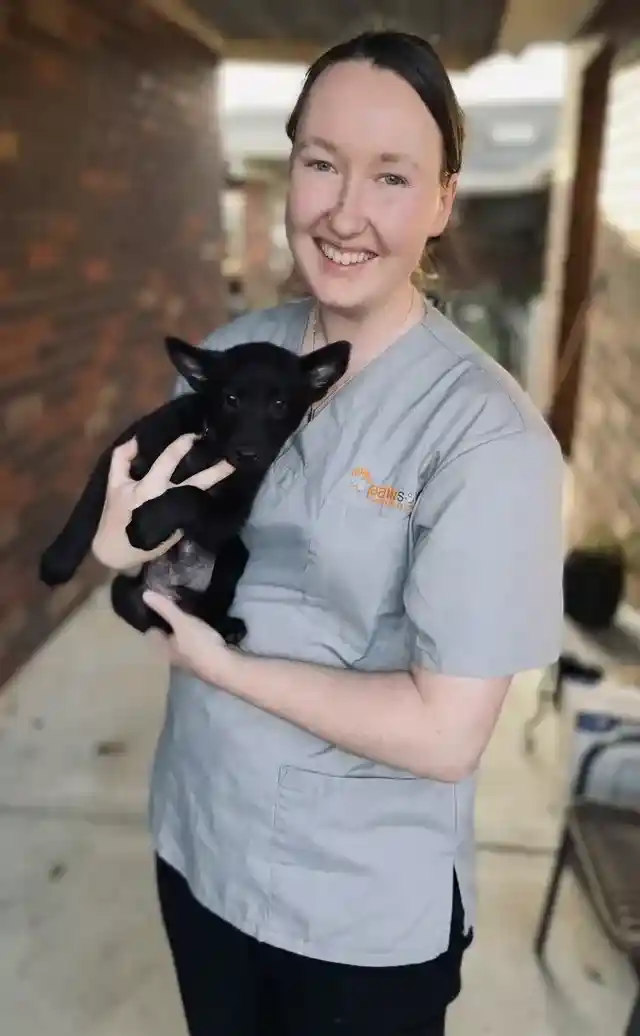
Dr Sarah Webb is a Melbourne-based veterinarian and Charles Sturt University graduate with experience across mixed practice, locum work, and mobile veterinary care. She has a special interest in poultry and backyard chicken health, alongside her work supporting dogs, cats, and other animals. Dr Sarah brings a practical, compassionate approach to veterinary care and is also passionate about mental health and wellbeing within the veterinary profession.
Our company
Open 7 days a week from 6:00am to 11:00pm including public holidays
© 2026 Pawssum Pty Ltd. All rights reserved.