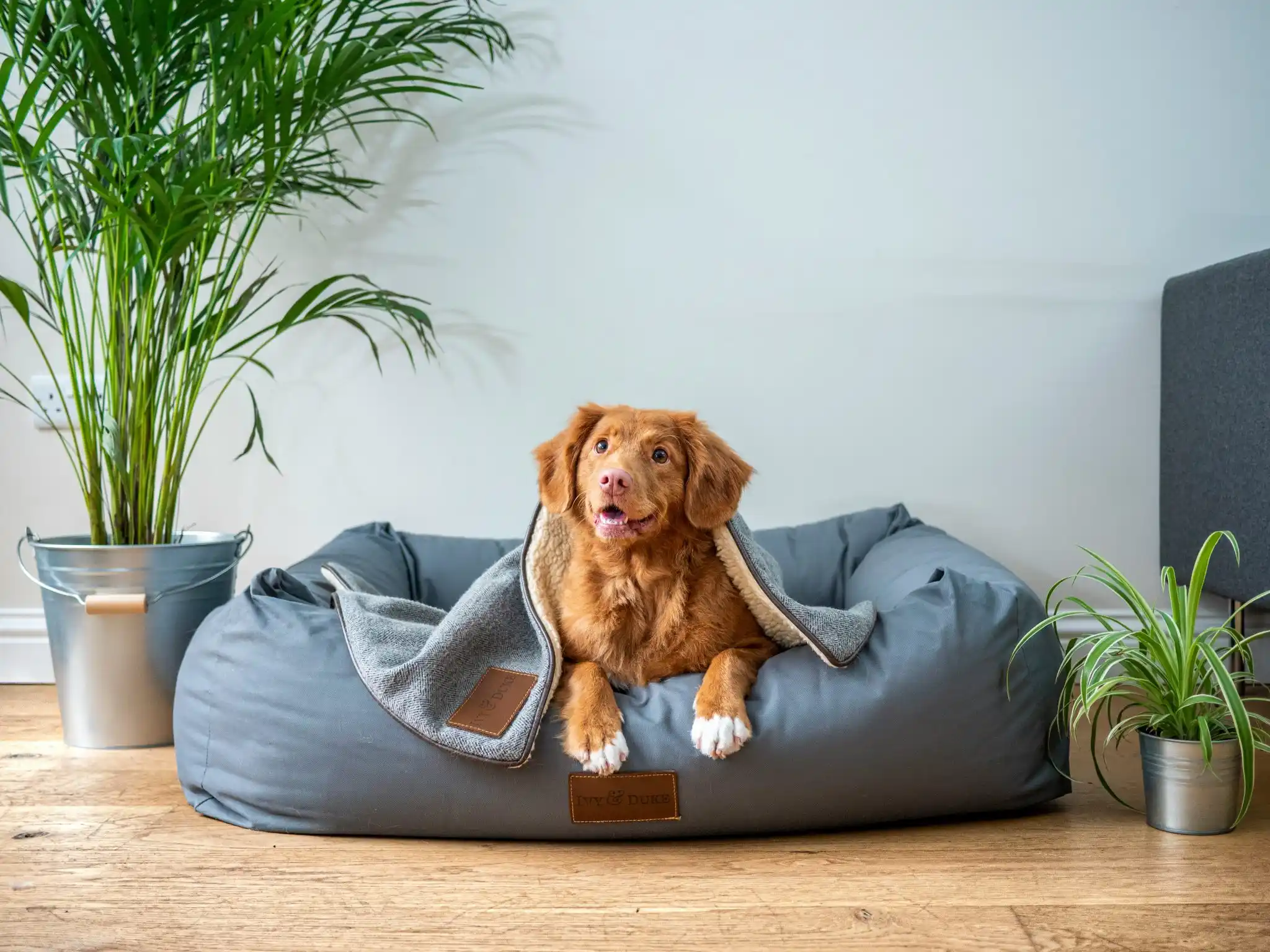
Dog Age Calculator: Dog Years to Human Years
Pop in your dog's age and size to see how old they are in human years, and what that means for their care.
Enter your dog's age and size, then press Calculate.
We can also help with blood tests and arthritis care at home.
Quick answer
A dog's first year equals about 15 human years, and by their second birthday they're around 24. After that, small dogs add about 4 human years each birthday and large dogs add 5 or more. That makes a 7-year-old Jack Russell about 44 in human years and a 7-year-old Labrador about 50.
Dog years to human years chart
Find your dog's age on the left, then read across to their size. The figures come from the size-based chart published by the American Veterinary Medical Association, and our vets use it as a starting point with Aussie dog owners every day.
| Dog's age | Small (up to 9 kg) | Medium (9 to 23 kg) | Large (over 23 kg) |
|---|---|---|---|
| 1 | 15 | 15 | 15 |
| 2 | 24 | 24 | 24 |
| 3 | 28 | 28 | 28 |
| 4 | 32 | 32 | 32 |
| 5 | 36 | 36 | 36 |
| 6 | 40 | 42 | 45 |
| 7 | 44 | 47 | 50 |
| 8 | 48 | 51 | 55 |
| 9 | 52 | 56 | 61 |
| 10 | 56 | 60 | 66 |
| 11 | 60 | 65 | 72 |
| 12 | 64 | 69 | 77 |
| 13 | 68 | 74 | 82 |
| 14 | 72 | 78 | 88 |
| 15 | 76 | 83 | 93 |
| 16 | 80 | 87 | 99 |
Giant breeds over 45 kg, like Great Danes, Irish Wolfhounds and Bullmastiffs, age faster again. Use the large column, add a few years, and think of them as seniors from about 5 or 6.
Is one dog year really seven human years?
The seven-year rule is easy to remember, but it gets the early years badly wrong. By their first birthday most dogs are fully grown and can have puppies of their own, which puts them closer to a 15-year-old than a 7-year-old. By two they're about 24. After that the pace slows to around four or five human years for every dog year, depending on size.
In 2020 researchers at UC San Diego studied DNA changes in Labradors and came up with a new formula: human age = 16 x ln(dog age) + 31. It puts a 1-year-old Lab at about 31 and a 10-year-old Lab at about 68. It's an interesting result, but it was only tested on one breed, so the size chart is the better everyday guide.
Why size changes how fast dogs age
Small dogs usually live longer and age more slowly once they reach middle age. Big dogs get there sooner. A 10-year-old Jack Russell is about 56 in human years, while a 10-year-old Labrador is closer to 66. That's a ten-year gap between two dogs born on the same day.
Australia has around 7.3 million pet dogs, and our favourite breeds cover every size, from Jack Russells and Cavoodles to Kelpies, Border Collies, Labradors and German Shepherds. As a rough guide:
- Small breeds live about 12 to 16 years.
- Medium breeds live about 10 to 14 years.
- Large breeds live about 9 to 12 years.
- Giant breeds live about 7 to 10 years.
Genes, weight, diet and regular vet care all make a difference, so plenty of dogs beat these numbers.
Dog life stages and what they need
Puppy (birth to about 1 year)
This is the busiest year of your dog's life. Your puppy needs their C5 vaccination course, a microchip and council registration, which are required by law in most states and territories, plus desexing, socialising and a good puppy food. If you live on the east coast, ask your vet about paralysis tick prevention from the start.
Young adult (1 to 3 years)
Full of beans and still learning their manners. Keep up training, exercise, a yearly check-up with vaccine boosters, and year-round heartworm, flea and tick prevention.
Mature adult (about 4 to 7 years)
Settled and usually healthy, though large breeds reach this stage sooner. Keep an eye on their weight and teeth, and don't skip the annual check-up.
Senior (from about 7 for large dogs, 8 for medium dogs and 10 for small dogs)
Most vets suggest a check-up every six months from here, plus regular blood tests to pick up kidney, liver and thyroid problems early. Stiff joints are common, especially on cold winter mornings, and arthritis care can make a real difference to how they feel. Older dogs also cope poorly with heat, so on hot Aussie days walk them early in the morning or once it cools down in the evening.
End of life
As your dog nears the end of their life, the focus shifts to comfort, pain relief and quality of life. Our free quality of life assessment can help you think it through, and our vets are always happy to talk it over with you.
Signs your dog is getting older
- Grey hair around the muzzle and eyes.
- Sleeping more and slowing down on walks.
- Stiffness when getting up, or trouble with stairs and jumping into the car.
- Cloudy eyes or poorer hearing.
- Putting on or losing weight.
- Drinking or weeing more than usual.
- Accidents inside, or seeming confused or unsettled at night.
Plenty of these have a cause your vet can treat, so mention any changes at your next visit. If your dog seems uncomfortable, book a check-up sooner rather than waiting.
Senior dog check-ups at home
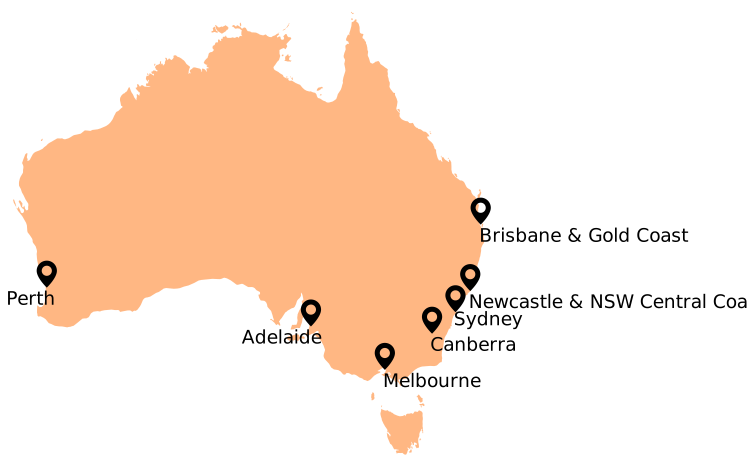
Car trips and waiting rooms can be hard on older dogs, especially with sore hips. A Pawssum vet can come to you for a senior check-up, blood tests and arthritis care, 7 days a week from 6:00am to 11:00pm, including public holidays. We've cared for more than 380,000 pets across Sydney, Melbourne, Brisbane, Perth, Adelaide, Canberra, the Gold Coast, Newcastle and the Central Coast, and hold a 4.6-star rating from more than 2,805 Google reviews.
How we worked out these numbers
Our calculator and chart use the size-based dog age chart from the American Veterinary Medical Association. The life stages on this page follow the American Animal Hospital Association's Canine Life Stage Guidelines, which vets in Australia use as well. Australian pet figures come from the 2025 Pets in Australia survey by Animal Medicines Australia. Every figure on this page has been checked by a Pawssum partner vet.
The calculator gives you an estimate. Every dog ages a little differently, and your vet is the best person to tell you how your dog is really going.
Dog age FAQs
How old is a 7-year-old dog in human years?
About 44 for a small dog, 47 for a medium dog and 50 for a large dog.
How old is a 9-month-old puppy in human years?
About 12. Puppies grow up fast, and most reach the equivalent of a 15-year-old by their first birthday.
How old is a 12-year-old dog in human years?
About 64 for a small dog, 69 for a medium dog and 77 for a large dog.
How old is a 14-year-old dog in human years?
About 72 for a small dog, 78 for a medium dog and 88 for a large dog.
When is a dog considered a senior?
Around 7 for large breeds, 8 for medium breeds and 10 for small breeds. Giant breeds can be seniors from 5 or 6.
How often should a senior dog see the vet?
Most vets recommend a check-up every six months for senior dogs, with blood tests at least once a year.
How can I tell how old my dog is if I don't know their birthday?
A vet can give a good estimate from your dog's teeth, eyes, coat and joints. Teeth are the best guide in young dogs. In older dogs, cloudy eyes, a grey muzzle and stiffness all help narrow it down. This is common with rescue dogs, and nearly half of Aussie dogs are adopted.
Does breed affect how fast a dog ages?
Yes, mostly through size. Small breeds usually live longer than large and giant breeds, and they reach their senior years later.
Reviewed by Dr Sarah Webb, BVSc.
Dr Sarah is a registered vet with over 5 years in small animal practice and has been doing Pawssum home visits in Melbourne, Australia since 2025, with a special interest in senior pet care and arthritis.
References
- American Veterinary Medical Association. Caring for senior cats and dogs
- Creevy KE et al. 2019 AAHA Canine Life Stage Guidelines. Journal of the American Animal Hospital Association
- Wang T et al. (2020). Quantitative Translation of Dog-to-Human Aging by Conserved Remodeling of the DNA Methylome. Cell Systems
- Animal Medicines Australia (2025). Pets in Australia: A national survey of pets and people
Got a cat as well? Try our cat age calculator. Want to check they're eating the right amount for their age? Use the pet calorie calculator.
Why over 380,000 pet lovers trust Pawssum
Local vets, national coverage
We have hundreds of registered vets located all over Australia.
Locations covered
Our company
Open 7 days a week from 6:00am to 11:00pm including public holidays
© 2026 Pawssum Pty Ltd. All rights reserved.