Dog Teeth Cleaning: Signs, Home Care and What to Expect
Quick answer: Dental disease is the most common health problem in pets, and bad breath is usually the first sign. Regular brushing with a pet toothpaste, plus dental chews and diets, helps control plaque, but hardened tartar needs a professional scale and polish under general anaesthetic. In Melbourne, Pawssum does this at home in a fully equipped ambulance van parked outside.
REVIEWER: Dr Tamara, Doctor of Veterinary Medicine (DVM)
It can be easy to put off having your dog's teeth professionally cleaned. You're likely to assume your dog doesn't have any issues with their teeth because they are still eating, wagging their tail and happy to see you. However, dental disease is the most common health condition affecting pets (RSPCA Australia), and it often develops gradually. This article will give you information on how to know if your dog needs their teeth cleaned, what you can do at home to help and what actually happens during professional dog teeth cleaning.
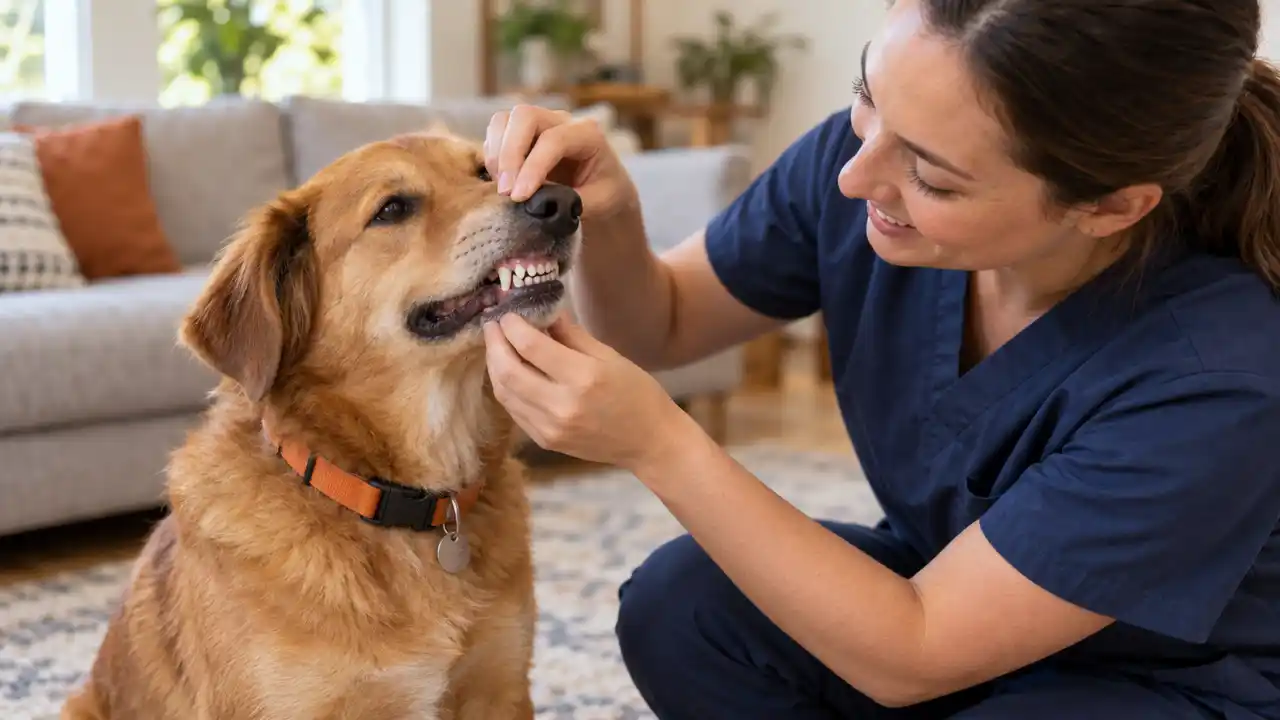
Why dog teeth cleaning matters
According to RSPCA Australia, around 80% of dogs will have some level of dental disease by the time they are 3 years old.
Plaque is a soft, sticky deposit of bacteria that can damage the teeth (RSPCA Australia). Regular brushing helps stop it turning into tartar (RSPCA Victoria). Dental disease can cause significant pain and, if it advances, tooth and gum infection, inflammation, and bone and tooth loss (RSPCA Australia). Left untreated, dental problems can also cause issues in other parts of your dog's body (RSPCA Australia).
Dogs can be very good at hiding pain in their mouths. Pets with oral health issues often show no obvious signs of dental disease, and many keep eating normally despite painful and advanced disease (Australian Veterinary Association).
“First time I look into a dog's mouth I often see hard tartar deposits on the back teeth which usually remain unseen by the owner, and more often than not there is also associated gum disease already present”
Signs your dog's teeth need attention
The first sign most owners will notice is bad breath. It is a key sign that something is wrong with your dog's teeth and gums (RSPCA Victoria). Other signs listed by RSPCA Victoria and RSPCA Queensland include:
- Tartar build-up on the teeth
- Red or bleeding gums
- Less interest in food, or chewing with pain
- Dropping food
- Drooling or dribbling more than usual
- Pawing at the mouth or shaking the head
- Loss of teeth
- Weight loss
If you notice any of these signs, RSPCA Queensland advises seeing your vet straight away. It is easier to have a quick look in your dog's mouth now than to deal with a painful infection.
Looking after your dog's teeth at home
Good dental care at home helps remove plaque build-up (RSPCA Victoria) and can prolong the time between professional cleans. The younger your dog is when you start, the easier it is to train them to accept this as part of their daily routine (RSPCA Queensland)
Brushing
Brushing your dog's teeth is the most effective thing you can do at home (RSPCA Australia). A good daily (or weekly) brush helps remove plaque build-up and prevent tartar forming (RSPCA Victoria).
Tips:
- Use a pet-specific toothpaste. Never use human toothpaste as it can cause stomach issues (RSPCA Australia).
- Start gently, with a microfibre cloth with the pet toothpaste on it (RSPCA Australia).
- Use a chicken or beef flavoured toothpaste. This can help make brushing more enjoyable (RSPCA Victoria).
- Keep sessions short and reward at the end.
If possible, it is best to start early, as adult dogs can be more reluctant (RSPCA Victoria).
Dental diets, chews and toys
Dental diets, chews and toys can help control plaque and tartar (RSPCA Australia). They are useful in addition to brushing. Talk to your vet about which options will be best for your dog's size and age.
What home care can't do
Tartar is a layer of minerals that has hardened and bonded to the tooth enamel. Once it has formed, it can only be removed by professional cleaning (RSPCA Australia).
What happens during a professional scale and polish
Professional dog teeth cleaning (often referred to as a dental scale and polish) will remove plaque and tartar.
During this process the vet will probe under the gum line (RSPCA Australia) and use an ultrasonic scaler to remove plaque and tartar from above and below it. Cleaning above the gum line alone will not detect disease that sits below it (Australian Veterinary Association). The teeth will then be polished. The mouth will be checked and any issues with the teeth and gums identified (for example, cracked or diseased teeth or gum disease).
Why we recommend a general anaesthetic
We strongly recommend having your dog's teeth cleaned under a general anaesthetic. Dental disease happens above and below the gum line. While we can often perform a thorough clean and check of each tooth and probe the pockets around each one for hidden disease under twilight sedation, general anaesthesia will allow for extraction of teeth if this is found to be required. Many teeth have multiple roots and cannot be extracted without painful drilling. General anaesthesia will ensure that your pet feels no pain. (Australian Veterinary Association). RSPCA Australia says dental work should ideally be done under a general anaesthetic for this reason. Another reason is to allow your dog's airways to be secured so that no water is aspirated during the procedure.
Your dog will need to be fasted beforehand.
“Where general anaesthesia needs to be avoided we can perform a scale and polish under twilight sedation. I do however strongly recommend a GA procedure for additional safety and so that you don't face a doubling of costs if extractions are required”
Why we don't recommend anaesthesia-free cleaning
Sometimes you may see "anaesthesia-free" teeth cleaning being advertised. This involves scaling the teeth of a conscious dog. This is purely a cosmetic procedure and will not help identify serious issues (Australian Veterinary Association). Removing the tartar you can see does not address the disease underneath, and dogs may still be in pain after the clean. RSPCA Australia says anaesthesia-free dentistry can cause pain and distress and should be avoided.
How often should your dog's teeth be checked?
RSPCA Australia recommends seeing your vet for a general health check at least once a year, which will include a dental check-up. Your vet will let you know how often your dog needs a scale and polish, as this varies from dog to dog.
At-home dog teeth cleaning in Melbourne
If your dog gets stressed when visiting the clinic, Pawssum offers a dental scale and polish at home in Melbourne. Dr Tamara (DVM) will come to you, and the clean is done under a general anaesthetic in our fully equipped ambulance van, parked right outside your home. Your dog stays close to familiar surroundings and there is no stress of a car trip or a waiting room. Pre-anaesthesia bloodwork is strongly recommended for senior pets (over 8yrs) and this can also be performed on site. Patients are fully monitored during the procedure and during recovery.
The cost is $649 covered the sedation clean] for one dog and includes:
- A home visit from the vet
- A general anaesthetic in our fully equipped ambulance van
- Ultrasonic scaling above and below the gum line
- Polish
- Comprehensive oral examination
If extractions are required you will be advised during the procedure and the cost will increase to $999 (small dog) or $1299 (large dog over 20kg). We will not proceed with extractions without your approval.
There is a discount when more than one dog is cleaned at the same visit. Your price is confirmed before the vet sets off. If Dr Tamara identifies any issues that need further treatment, she will explain what she has found and talk you through the recommended next steps.
Your dog will need to be fasted before the anaesthetic, so this service cannot be booked for the same day. We will give you exact fasting instructions when you book. Payment can be made on the day by card, or with a payment plan through VetPay or ZipPay.
Frequently asked questions
Can I use my own toothpaste on my dog?
No. Always use a pet-specific toothpaste. Human toothpaste can cause stomach issues (RSPCA Australia).
How often should I brush my dog's teeth?
RSPCA Victoria recommends a good daily (or weekly) brush.
Does my dog need to fast before a dental clean?
Yes. As your dog will have a general anaesthetic, they will need to be fasted. We will give you exact fasting instructions when you book.
Is a general anaesthetic safe for my dog?
RSPCA Australia says modern anaesthetic agents used by vets are safe, anaesthetised animals are closely monitored and complications are rare. With adequate precautions and planning, older pets and pets with chronic diseases can also have an anaesthetic safely.
Is the at-home dental service available outside Melbourne?
At this point we only offer our home dental scale and polish in Melbourne. However, we do offer other mobile vet services including health checks (where your vet can examine your dog's teeth) in Sydney, Melbourne, Brisbane, Perth, Adelaide, Canberra, Newcastle and the Central Coast.
Book your dog's dental clean at home
Keeping your dog's breath fresh and gums healthy is easier than trying to get them back. Book your dog's teeth cleaning at home in Melbourne today.
Book online or call: 1300 343 580. We are open from 6am to 11pm, 7 days a week.
Sources
By Tamara Mallan (DVM)
Last updated on 14th November 2026
About the author

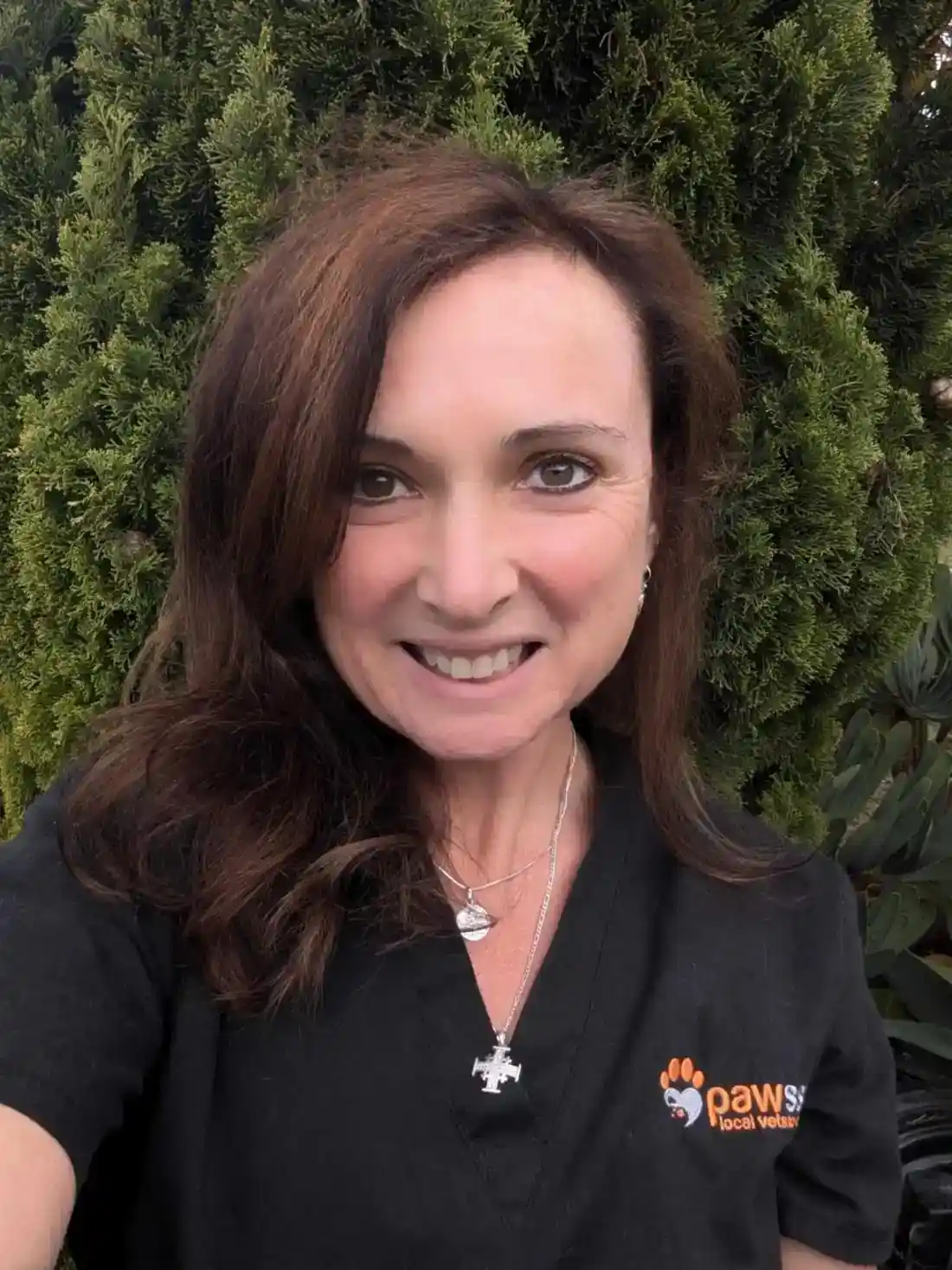
Dr Tamara is a Melbourne-based veterinarian known for her calm, gentle manner with pets of all sizes. With a professional interest in soft-tissue surgery, she is confident and meticulous with procedures that call for precision and gentle sedation, including dental scale and polish visits. She takes the time to conduct a thorough oral examination, explain what she finds in plain words and let you know if there are any major oral health concerns, all while your dog stays relaxed in their familiar home.
Our company
Open 7 days a week from 6:00am to 11:00pm including public holidays
© 2026 Pawssum Pty Ltd. All rights reserved.