Hot Spots on Dogs in Australia: Causes, Treatment and Prevention
A hot spot can go from nothing to the size of your palm in about six hours. Most dog owners will tell me that their dog was fine for breakfast but has a raw spot on its neck by dinner time. They are not exaggerating - that is genuinely how fast these spots can develop.
Pyotraumatic dermatitis - also known as acute moist dermatitis - occurs when a dog’s skin becomes traumatised, becomes infected and starts to weep. Once the spot starts on the dog, the dog cannot seem to get it out of their mind and scratching at the spot makes it more likely to scratch elsewhere on their body.
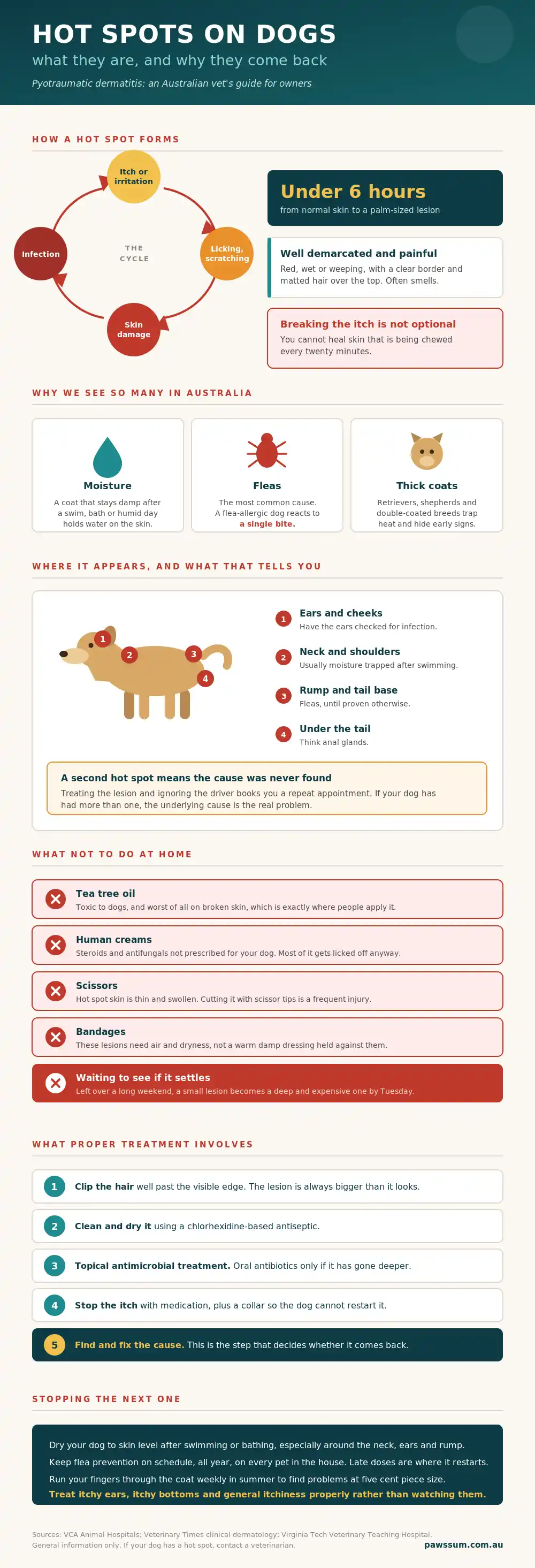
Hot spots are very common in Australia due to three main contributing factors:
humidity and water, fleas and flea allergy dermatitis and the type of coat that some dogs have. Humidity and water - especially after swimming or beach trips - leads to dogs getting damp coats that the bacteria needs to overtake the skin. Fleas and flea allergy dermatitis is also common - one bite of a flea can lead to a dog becoming itchy for several days. Finally, the breed of dogs that have thick coats are the most common with hot spots - golden retrievers, labradors, german shepherds, rottweilers and crossbreeds with fluffy coats.
The signs of a hot spot on a dog include sudden attention to one spot on the body, licking or scratching at that spot, a patch of wet and red skin that may be hairless and have an unpleasant smell, pain when touching the area and rapid growth of the spotted area.
Case examples of dogs with hot spots:
Golden retrievers are prone to getting hot spots, especially after going to the beach. The five-year-old from Sydney’s north developed a hot spot after a weekend at the beach where the dog was rinsed off in the backyard. The spot below his left ear was the size of a coaster and the dog would not allow others near his head. The treatment included sedation to clip the dog’s hair around the spot, using an antiseptic to clean the area and using anti-inflammatory medicine to stop the dog from scratching at the spot. The dog was comfortable within 48 hours. The owner was advised to dry the dog properly after swimming.
The other dog discussed has a hot spot that reoccurred every five months. It developed on the crossbreed’s rump, the same spot where fleas tend to live. The owner insisted that the dog did not have fleas - despite the preventative treatment for dog receives every few weeks. The owner only needed to start treating the other animals in the house for fleas - the dog had developed a recurring hot spot due to an underlying issue.
Another example of a dog with a hot spot occurred on a labrador. The dog did have a hot spot on its cheek but the root of the problem was an ear infection - the dog was scratching at the side of its head for several weeks. Only treating the hot spot would have not helped the dog. The ear infection needed to be treated for the hot spot to go away.
Knowing that hot spots near the ear or near the tail base indicate an ear infection or fleas and knowing that hot spots near the anal region indicate anal gland issues can help the owners treat the dogs correctly. The hot spot that develops on a dog is likely due to an issue one step further in from the spot itself.
What proper treatment involves
Clipping the dog’s hair is not optional; it’s the step that most dog owners want to skip. Hair traps moisture and discharge against the dog’s skin and prevents topical treatments from reaching the problem areas. The clip needs to extend beyond the visible margin of the hot spot into normal-looking skin.
Cleaning the area with an antiseptic (usually chlorhexidine-based) followed by drying the area properly.
Applying a topical antimicrobial treatment to the hot spots. This is the treatment of choice for genuine surface hot spots. Oral antibiotics are used for infections that have gone deeper into the skin (as determined by the vet during physical examination or cytology).
Giving the dog something to stop the itch. Anti-inflammatory or anti-itch medication will help to stop the cycle of itching and is usually the treatment that makes the biggest difference quickly.
Putting a collar or cover on the dog to stop it from going back to the treated area.
Finding and treating the cause of the hot spots to determine how long the dog will be suffering from them again.
Most hot spots improve within a couple of days and take one to two weeks to fully heal. Hair will grow back in a few days and a bald patch will grow back after the hot spot has healed.
What not to do at home
Using tea tree oil at home on your dog. Tea tree oil is common in Australian bathrooms and is toxic to dogs, especially if it is applied to their damaged skin.
Applying human creams at home on your dog. This includes creams that contain steroids or antifungals that were not prescribed for your dog. Some are harmful to dogs and dogs will lick most of it off regardless of whether or not it is safe for them.
Using scissors at home. The skin of hot spot areas is thin and easily damaged with scissors.
Avoid using bandages at all costs. Hot spot areas need to breathe and dry out rather than having a warm damp dressing applied.
Avoid waiting for hot spots to heal. If a hot spot is left untreated over the weekend it will be a much bigger problem by the following Monday.
Clipping and cleaning the dog will suit a visit to the home by the vet. Many dogs that suffer from hot spots are sore and nervous about their head and will do better on the lounge room floor in their own home rather than in the vet’s waiting room with other dogs.
Preventing the next one
Always dry your dog thoroughly after swimming or bathing, especially if the dog has a thick coat and you need to dry them down to the skin around the neck, ears and rump.
Keep your dog free from fleas at all times. Use flea prevention products on all pets in the house and especially on thick-coated dog breeds.
Groom your dog at least once a week in the summer during the peak of the dog’s shedding season. Running your fingers through your dog’s coat to the level of its skin once a week will find any skin problems before they grow larger than the size of a five cent piece.
Finally, deal with your dog’s itchy ears, itchy bottoms or generalised itchiness. Itch has a cause and hot spots are one of the reasons why dogs get itchy and suffer from the condition.
When to call a vet
Call the same day if the lesion is wet, spreading, painful to touch, or if your dog will not stop working at it. Call sooner if there is a smell, discharge, or if your dog seems unwell in itself.
If this is the second or third hot spot, book the appointment even if the current one looks mild. That pattern is telling you something, and it is usually fixable once someone identifies what it is.
Pawssum's mobile vets treat skin conditions in homes across Sydney, Brisbane, the Gold Coast, Melbourne, Adelaide, Perth and Canberra. If your dog has a hot spot, we can clip, clean and treat it at home, and help you work out what caused it.
By Pawssum
Last updated on 4th August 2026
About the author

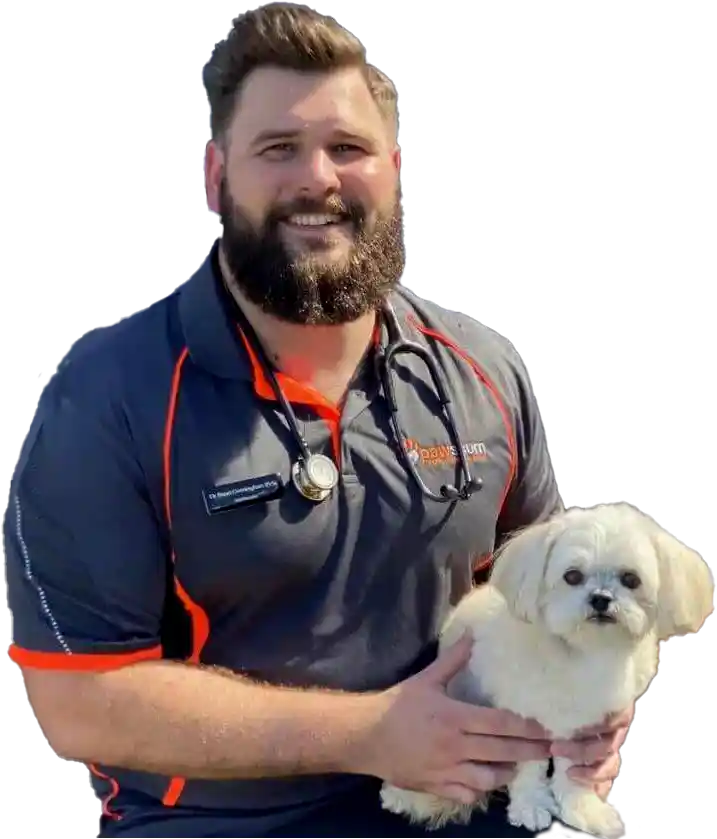
Pawssum provides affordable and convenient pet care in the comfort of your home by local, trusted vets.
Our company
Open 7 days a week from 6:00am to 11:00pm including public holidays
© 2026 Pawssum Pty Ltd. All rights reserved.