Dog Ear Infections in Australia: Symptoms, Causes and Treatment
Ear infections are the most common ailment brought to vets by dogs. Between 7 and 10 per cent of dogs seen in vet clinics each year in Australia are affected by ear infections. They are also one of the most commonly mismanaged conditions.
When dogs with ear infections are treated, their ears often clear up. The owner and vet are happy. Six weeks later, however, the dog returns with the same problem.
Again, the ear is treated and it clears up. But again, six weeks later the dog with the ear infection returns.
The reason for this recurring problem is that ear infections are a symptom of another problem. Only treating the symptom will provide relief for a few weeks before the dog returns with the same issue.
Yeast and bacterial infections
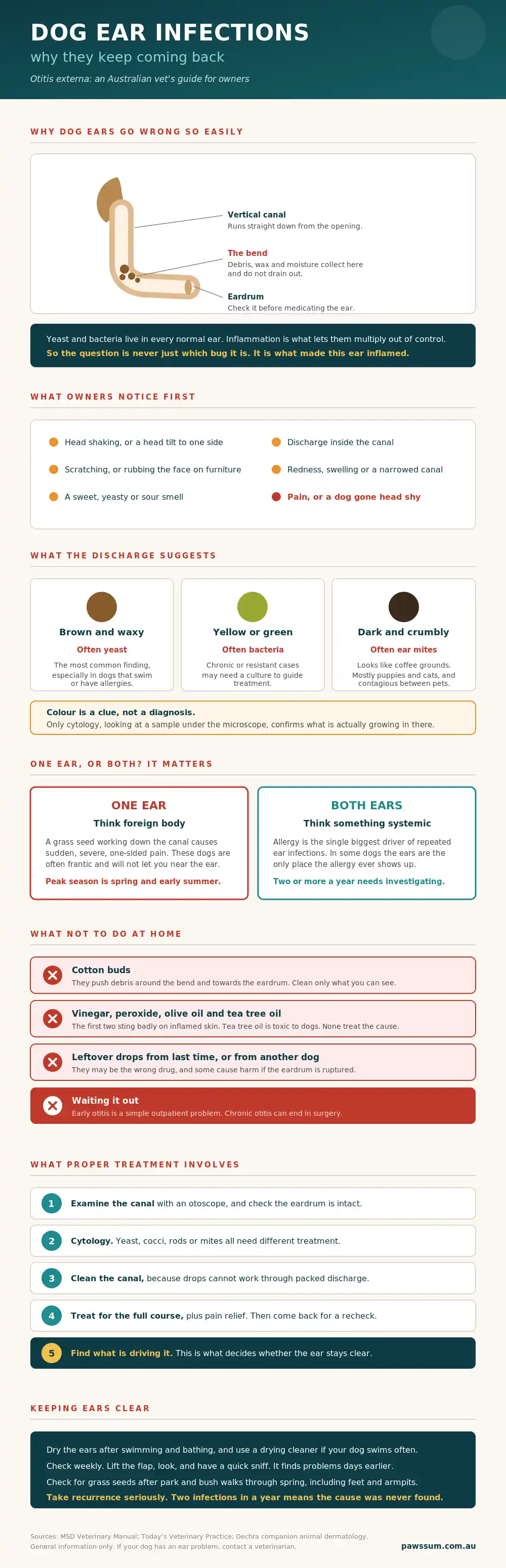
A dog’s ear canal is L-shaped. The ear flap droops over the ear opening. These factors mean that debris, wax and moisture collects in the ear and cannot drain out of the ear like a human ear can.
The warm, damp ear is an ideal place for yeast and bacterial overgrowth. Add humidity to the mix from the Australian climate and excessive swimming, and you have the perfect environment for ear infections to develop.
The number of yeast and bacteria that normally live in a dog’s ear is small and harmless. But if the ear becomes inflamed, those organisms can multiply out of control. Ear infections are therefore caused by inflammation in the ear rather than the presence of a particular organism.
Signs of ear infections in dogs
These are the signs of ear infections that most owners see.
Head shaking or ear tilting
Ear scratching
A smell from the ear
Ear discharge - brown and waxy indicates yeast infections. Yellow and green indicates bacterial infections. Coffee grounds-like discharge indicates ear mites
Redness and swelling in the ear flap
Pain in the ear when examined by a vet
A dog shaking its head persistently and attempting to avoid ear examination by its owner requires prompt veterinary attention.
The causes of ear infections
Allergies are the most common cause of ear infections in dogs. Environmental allergies often present first in the ears before other parts of the body. In some dogs, the ears are the only place where the allergy manifests itself. A dog having three ear infections a year usually has an allergy that remains untreated.
Grass seeds are a common problem in Australia in the spring and summer. When a dog rolls over in the grass, a seed can work its way into the ear and against the eardrum causing pain. This can cause the dog to become frantic.
Moisture in the ear resulting from swimming or bathing softens the ear canal allowing yeast overgrowth.
Ear mites - usually found in puppies and cats but not uncommon in dogs.
Coat type and ear anatomy - hairy ear canals which are narrow and deep such as in the oodle crosses
Underlying medical conditions such as hypothyroidism which can cause inflammation of the ears
Chronic ear infections can make the ear canal thick and narrow which makes drainage of fluid difficult and ear treatments less effective. In the worst cases, the changes in the ear canal are permanent.
Case studies from home visits
The following case studies are composite cases drawn from the ears of dogs brought to mobile vets for examination at homes throughout Australia.
The Cavoodle with ear infections
A Cavoodle in Melbourne had developed her fourth ear infection within the past fourteen months. She had received ear drops each time the infection flared up but the problem had returned each time.
Both of her ears were infected. Grass or foreign bodies only affect one ear. Systemic conditions that cause ear infections affect both ears.
Her ears were red, moist and full of brown waxy discharge. The pinkness and itchiness of her paws were also a sign of an allergic dog.
The cause of the ear infections in the Cavoodle was her allergy. While it was possible to treat her ear infections individually, the only way to stop the infections recurring was to treat the underlying allergy. The dog’s ears were hairy an attribute shared with other breeds in the oodle crosses.
The owner of the Cavoodle asked why her dog had ear infections every fourteen months. The answer was four courses of ear drops in the same period was not four ear infections but one underlying problem to which the dog was reacting.
The kelpie who came home from the park in agony
A six-year-old kelpie in outer Brisbane, in November. She was fine that morning, but by mid afternoon she was shaking her head violently, holding her head tilted to one side, and crying when she was touched.
A case of sudden severe ear pain in an Australian dog in grass seed season - the foreign body is the first thing to investigate. It is common for dogs to be too painful to examine while conscious and attempting to examine an ear that is in severe pain is an unkind act; sedation is required. The kelpie was sedated and the grass seed was located in the horizontal ear canal, against the eardrum. The dog was comfortable immediately and required a short course of treatment for the inflammation that resulted from the grass seed getting into the ear; her owner now checks her ears, feet and armpits after every trip to the park through spring.
The older labrador with the ear that had stopped responding
A ten-year-old labrador in Perth who suffered from ear problems for much of his life, with a painful and smelly left ear that did not respond to the ear drops that had helped in the past.
The causes were resistant bacteria (Pseudomonas) and thickened, narrowed ear canal from years of inflammation. While the ear does respond to proper investigation and treatment, the dog would have had an easier decade if his issues were investigated when he was four years old.
What proper treatment looks like
An otoscope examination of the ear canal to check the integrity of the eardrum. Some ear medications can damage the middle ear if the membrane that separates the ear canal from the middle ear is ruptured. This is one of the reasons that pouring something into the ear before examining it is a bad idea.
Cytology to determine the type of infection in the ear; it takes only a few minutes to collect the sample and examine it under a microscope. If the infection is yeast, mites, bacteria or another type of pathogen, the ear can be treated appropriately.
Cleaning the ear to remove debris so that the topical medication can work; the medication cannot work if it cannot reach the ear canal's infection.
Applying the appropriate topical medication for the type of infection for the full course of treatment.
Using anti-inflammatory medications if necessary.
Performing a culture of the ear to detect the type of bacteria causing the problem; for chronic ear infections that have become resistant to treatment or contain bacteria that are rods in shape rather than cocci, culture testing is important to determine the appropriate treatment.
Identifying the cause of inflammation in the ear so that it can be managed.
A recheck of the ear is important and more often than owners may think. An ear may look better on the outside but still have an infection deep in the ear canal. It is important to address ear infections when they are first identified.
What not to do at home
Do not use cotton buds to clean the ear. These push the debris further into the ear canal towards the eardrum. Only clean the part of the ear that can be seen.
Common home remedies that have been used for ear infections include vinegar, hydrogen peroxide, olive oil and tea tree oil. Vinegar and hydrogen peroxide can cause stinging in the ear when the ear is inflamed. Tea tree oil is toxic to dogs. None of these remedies will address the issue in the ear canal.
Do not use any leftover ear drops from either the dog or another dog in the house. The drops may be the wrong medication for the dog’s ear problem, and using drops in an ear with a ruptured eardrum can cause damage.
Do not delay treatment. The sooner ear infections are treated the better. Early otitis can be treated at a veterinary clinic as an outpatient. In severe cases of chronic ear infections the dog may need to go under the knife.
Using an ear cleaner on a healthy ear is fine. However, treating an ear infection blind is not.
Preventing the next one
After every swim or bath, dry the dog’s ears. Use an ear drying cleaner as recommended by the veterinarian if the dog swims in the lake or pool often.
Check the dog’s ears every week. Dogs need to have their ears lifted to look into the canal and have a quick sniff to ensure that there is no issue. Owners who check their dog’s ears weekly pick up issues days before those who do not check their dog’s ears.
Check the dog’s ears after walks through the park or bush, especially during spring and summer when grass seeds are common. Check the dog’s feet and armpits for grass seeds as well.
If your dog has hairy ear canals, keep them neat and managed. Ask the groomer to be conservative in removing ear hair rather than being aggressive about it.
Two or more ear infections in a year warrants investigation into the underlying cause.
When to call a vet
A visit to the veterinarian should be booked promptly should the dog be shaking its head, if there is any discharge or smell from the ear, if the ear is red or if the dog will not allow you to touch the ear.
The same day should be scheduled if the dog is shaking its head in response to ear pain, has a head tilt, difficulty keeping balance or crying out of apparent discomfort as the dog cannot settle in one position.
Ears are a good candidate for a vet visit at home. A dog that is in pain in its ears will be more comfortable at home getting examined by the veterinarian than at the busy clinic. The follow-up visit can also be done at home.
Pawssum's mobile vets attend homes across Sydney,Canberra, Newcastle, the Central Coast, Adelaide, Perth, Brisbane, the Gold Coast and Melbourne. If you suspect tick paralysis, call us and we will attend urgently or direct you to the nearest facility equipped for emergency vet care.
By Pawssum
Last updated on 4th August 2026
About the author

Pawssum provides affordable and convenient pet care in the comfort of your home by local, trusted vets.
Our company
Open 7 days a week from 6:00am to 11:00pm including public holidays
© 2026 Pawssum Pty Ltd. All rights reserved.