Why Is My Dog Vomiting Now and Then? Common Causes and Patterns
Most dogs bring something up now and then, and a single vomit in a dog who is bright, eating and acting normally is rarely serious. This guide is for the dog who vomits on and off: once a week, a few times a month, or in a pattern you have started to notice.
If your dog is vomiting right now, has vomited several times today or seems unwell, read our guide to dog vomiting and when to worry instead, or book a vet visit.
First, is it vomiting or regurgitation?
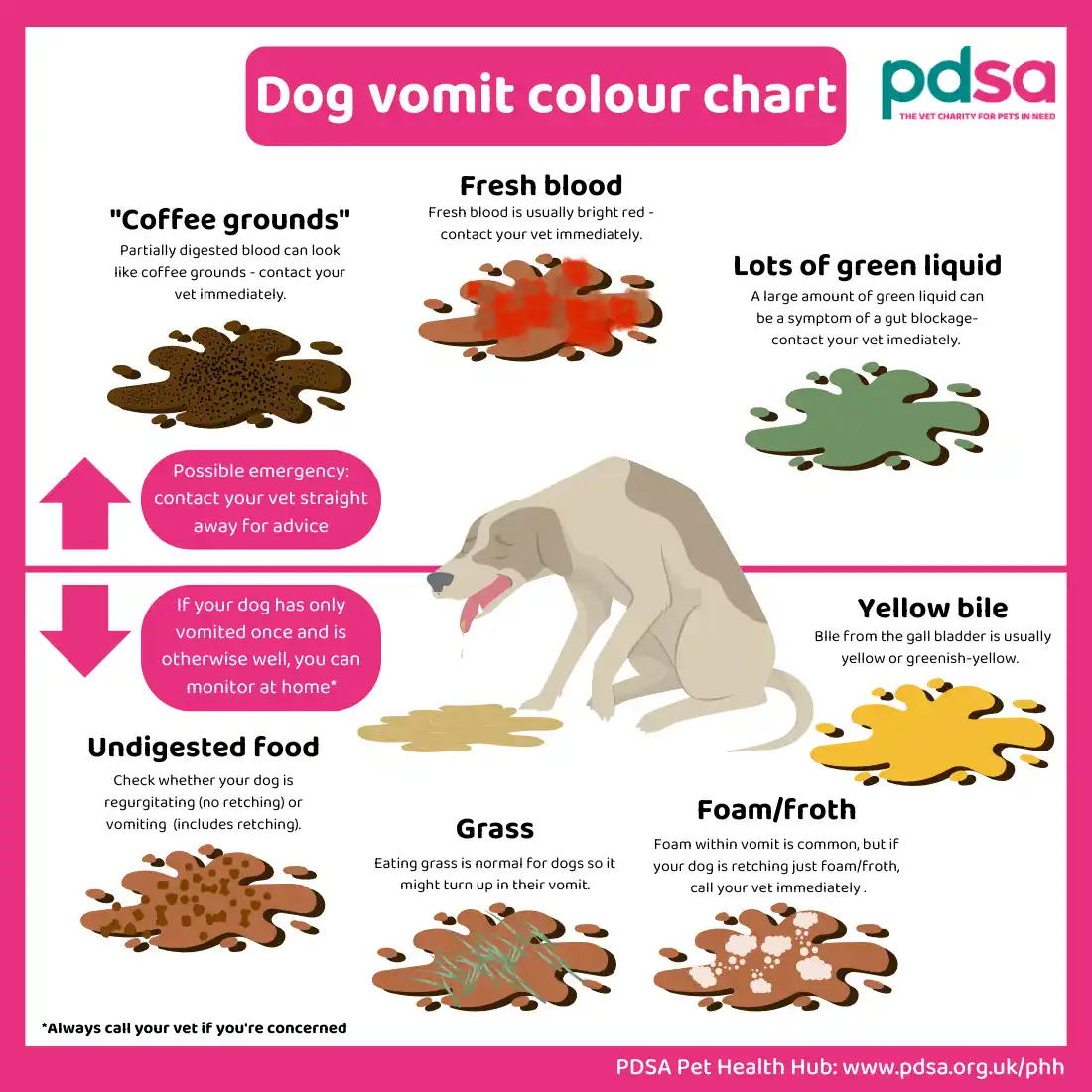
Vomiting is active. You will see heaving and retching as the stomach contracts, and what comes up is usually partly digested food, froth or yellow bile. Regurgitation is passive. Food slides back up with little warning, often soon after eating, and looks much the same as it went down.
The difference matters because regurgitation usually points to a problem with the oesophagus (the food pipe) rather than the stomach, and it always needs a vet check. If you are not sure which you are seeing, a short video on your phone is the most useful thing you can show your vet.
Common causes of on-and-off vomiting
Eating too fast or eating things they should not
Scavenging, rich leftovers, bones, sticks and grass are the most common reasons a healthy dog vomits occasionally. Dogs who gulp their food may bring it straight back up. A slow-feeder bowl or splitting meals into smaller portions often helps.
Yellow bile first thing in the morning
Some dogs vomit a small amount of yellow fluid or foam early in the morning, after a long stretch without food, and are completely well the rest of the day. This is often called bilious vomiting syndrome. A small meal late in the evening fixes it for many dogs. In a review of 20 cases at Colorado State University, 85% of dogs had intermittent vomiting of bile and 60% vomited in the early morning. Vets only make this diagnosis after ruling out other causes, so it is worth a check first.
A change of food or a food intolerance
A sudden switch of food, a new treat or a dietary intolerance can cause recurring vomiting, sometimes with soft poo. When you change diets, mix the new food in gradually over about a week.
Intestinal worms
Worms can cause vomiting, especially in puppies. Check that your dog's worming is up to date.
Ongoing gut disease
Chronic inflammation of the stomach or intestines can cause vomiting that comes and goes for weeks or months, often alongside diarrhoea, a fussy appetite or slow weight loss.
Problems outside the gut
Kidney disease, liver disease, pancreatitis, hormonal conditions such as Addison's disease and diabetes can all show up first as vomiting now and then. This is more likely in middle-aged and older dogs, and a blood test is usually how it is found.
Something partly stuck
A piece of toy, a corn cob or a bone can partly block the gut and cause vomiting that comes and goes over several days. Dogs may eat and then vomit, or lose interest in food. This needs a vet promptly.
What to note before you call the vet
- How often your dog vomits, and at what time of day
- Whether it happens before or after meals, and how long after
- What comes up: food, froth, yellow bile, blood, or dark material like coffee grounds
- Any change in appetite, energy, thirst, weight or poo
- New food, treats, medicines, or anything chewed or swallowed
A photo of the vomit and a note of dates is far more useful to your vet than memory.
When occasional vomiting stops being occasional
- Vomiting more than once in a day, or on several days in a row
- Blood in the vomit, or dark material that looks like coffee grounds
- Vomiting along with diarrhoea, lethargy or not eating
- A swollen, tight belly or retching with nothing coming up. This can be bloat and is an emergency
- Puppies, older dogs, and dogs with an existing illness
- Any chance your dog has eaten something toxic
For possible poisoning, read common pet toxins in Australia and what to do if your dog eats chocolate. If you are not sure whether it is an emergency, our guide to when it is a pet emergency walks through the signs.
What the vet will check
Your vet will ask about the pattern, examine your dog, feel the belly and check weight against previous visits. Recurring vomiting often needs blood and urine tests, which a mobile vet can collect at home and send to the lab. If x-rays or an ultrasound are needed, your vet will arrange a referral to a clinic.
For care at home after a one-off episode, see what to do if your dog is vomiting. Pawssum vets can examine your dog at home, seven days a week from 6am to 11pm. Book a home visit or see services and pricing.
Related Pawssum services
Keep reading
Sources
By Dr. Jessica Goh - BVSc/DVM, registered veterinarian
Last updated on 6th November 2026
About the author


Dr Jessica Goh is an experienced Melbourne mobile veterinarian with 12 years in small animal practice and a strong background across general practice, veterinary internships, and emergency care. A University of Melbourne-trained veterinarian, Dr Jessica brings calm clinical judgement, gentle handling, and clear communication to every home visit. She is especially valued for helping pets and families feel supported during stressful health concerns, senior pet care, urgent consultations, and compassionate end-of-life appointments. Through Pawssum, Dr Jessica provides professional, reassuring veterinary care in the comfort of your pet’s own home.
Our company
Open 7 days a week from 6:00am to 11:00pm including public holidays
© 2026 Pawssum Pty Ltd. All rights reserved.