Kidney Disease in Older Cats: Symptoms, Diagnosis and Treatment | Australian Vet
By the time a cat looks unwell with kidney disease, roughly two thirds of its kidney function is already gone.
This one fact about kidney disease explains almost everything about the illness. It explains why cats with kidney disease are often diagnosed so late in their condition. It explains why cats owners are often caught off guard at the diagnosis of kidney disease in a cat that seemed fine just a month prior. It also explains why veterinarians order blood tests for cats that are otherwise healthy.
Kidney disease is the most common serious illness in cats over the age of fifteen years. Around 80 per cent of cats over the age of fifteen have kidney disease. Therefore, for any cat owner whose cat is heading into its senior years, kidney disease is the illness most likely to affect their cat in the future.
The good news about kidney disease is that cats diagnosed early can live comfortably for years. The diagnosis of kidney disease is not the end of the story for cats with this condition. For many cats, the diagnosis is late, and that is the difference this article is about.
Cats often hide kidney disease well. The primary function of the kidneys is to filter waste from the blood and to maintain the body's water balance. As the kidneys lose their function, they can no longer concentrate the urine, and the cat will pass more dilute urine and drink more water to compensate for the water they are losing in the urine.
Cats are excellent at hiding illness from humans. The kidneys of a cat can lose a large proportion of their function before any changes are visible. Any changes that are visible to the owner develop slowly and gradually, which can be easily attributed to the normal aging of the cat.
Most of those changes also happen in a litter tray or overnight. It is a disease almost designed to be missed.
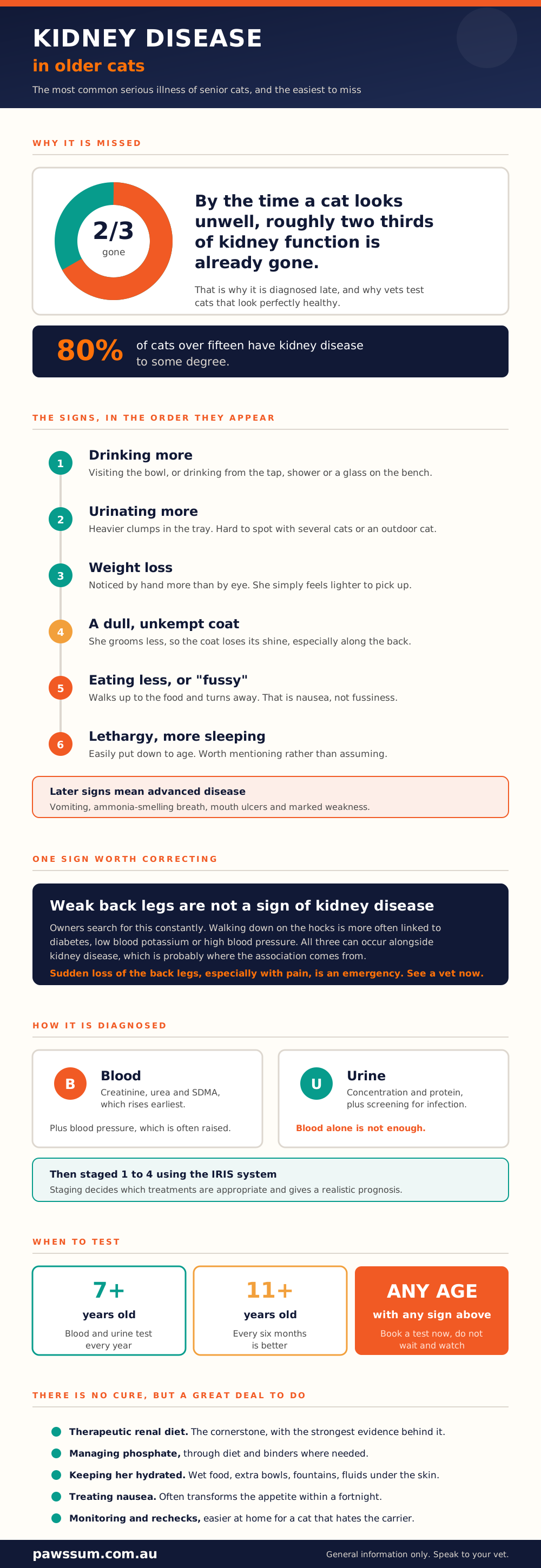
The signs, in the order they usually appear
Drinking more.
This is the first sign of kidney disease to appear in most cats. Yet, it is one of the most difficult to notice. A cat that never bothers with the water bowl will begin to visit it, or may even begin to drink from the tap, the shower, or even a glass of water left on the kitchen bench.
Urinating more.
The result will be heavier clumps of urine in the litter tray. If you own more than one cat, or if your cat spends time outdoors, this is difficult to monitor. This is part of the problem in detecting kidney disease in cats.
Weight loss. Often gradual and only noticed when the cat feels lighter to pick up, or when the spine and hips become more prominent through the coat.
A dull, unkempt coat. Cats with kidney disease groom themselves less, leading to dull and greasy coats.
Eating less, or becoming fussy about eating. Cats with kidney disease often feel nauseated, leading them to walk up to their food but never eat. This behaviour can be observed by owners as "fussiness" regarding eating. However, the behaviour is due to nausea.
Lethargy and more sleeping. Another symptom that is easily attributed to the age of the cat, and one you might want to mention to your veterinarian.
Symptoms of advanced kidney disease include vomiting, breath with an ammonia-like smell, ulcers in the mouth, and weakness.
One sign that is worth correcting
Many owners search for weakness in the back legs of their cats, or for the cat to walk on its hocks, as a sign of kidney failure. This is not typical of kidney failure.
The weakness in the back legs is more common with diabetes, potassium in the blood being too low, and high blood pressure. These conditions can co-exist with kidney disease (which is probably where the owners' knowledge of such a connection comes from), but again, the sign of weakness in the legs is not due to the kidney disease.
A cat that can't use its back legs, especially if it is crying out in pain, needs to be seen by a veterinarian immediately. A blood clot is one of the possible reasons for this problem, and it is an emergency.
Which cats are at risk
Age is the biggest factor in cats getting kidney disease. From around seven years of age, a cat's risk begins to climb, and by fifteen years most cats will have kidney disease to some degree.
Some breeds are also more at risk than others. For example, Persian cats are prone to polycystic kidney disease. Abyssinians, Siamese, Burmese and Maine Coons are also over represented with kidney disease.
Other factors include a history of urinary obstruction, dental disease, high blood pressure, hyperthyroidism, or any history of acute kidney injury, including from toxic substances like lilies. Every part of a lily, even the pollen or the water from the vase in which the lily was placed, is dangerous for cats.
Case examples from home visits
The cases below are composites of individual cats and their owners from the presentations that our mobile vets attend regularly. While the details have been changed, the cats featured in these case studies exhibit the typical conditions that we see within Australian homes.
The fourteen-year-old who had just become fussy
This cat is a domestic shorthair who is fourteen years old and lives in Sydney's inner west. Her owner booked in for a visit to discuss changing her cat's brand of food over the last two months.
Beyond the food, the cat had started to drink from the bathroom tap, something she had never done before. The cat also felt lighter when picked up, and her once-immaculate coat had started to become somewhat unkempt along her back.
None of that had seemed like illness to her owner. Together, it is a textbook picture.
The vet took blood and urine samples during the visit. In a cat, testing at home is an advantage, because it removes the effect of clinic stress on the results. The test confirmed the presence of chronic kidney disease at a moderate stage.
She was placed onto a therapeutic renal diet. That is the single most evidence-based treatment for this condition, along with medication for the nausea. Within a fortnight of placing her onto the diet, her owner noticed an improvement in her appetite.
She lived for another two and a half years.
The point worth taking from this case is that the owner rang about fussy eating. She did not think she was reporting a serious illness. She was.
The senior blood test that found it early
A ten-year-old cat in Brisbane with no symptoms at all was tested for kidney disease as part of a routine test for all senior cats.
The test showed the early stages of kidney disease. When confronted with the fact that her cat seemed healthy, the owner questioned whether it was worth having undertaken such a test.
It was the most valuable test the cat would ever have had. Treating the early stages of kidney disease can go a long way to helping a cat live a healthy life for as long as possible. From diet to hydration, there are various options to slow the decline of the cat's health.
Due to the early detection of the disease, the cat remained in the early stages for several years.
This is the test that should be undertaken by every owner with a cat over seven years of age. Testing kidney function in healthy looking cats every year is part of catching the disease in the earliest and most catchable stages.
The cat diagnosed too late for the good options
A sixteen-year-old cat in Melbourne was presented with vomiting, a refusal of food, lethargy for several days, and was diagnosed with kidney disease in its later stages.
He was severely dehydrated, had ulcers in his mouth and the ammonia-like breath that goes with advanced disease. His owner told me, honestly and with real distress, that he had been drinking more for the better part of a year and she had assumed it was simply old age.
He needed hospital admission for intravenous fluids. He improved for a period, but his disease was advanced and his remaining options were limited.
I include this case because that year of increased drinking was the window. There is no useful blame in it, because nothing about the early stage of this disease looks like an emergency. But a blood test at any point in that year would have changed what was possible.
How it is diagnosed and staged
Diagnosis needs both blood and urine. Blood alone is not enough, because how well the cat is concentrating her urine is a critical part of the picture.
Blood testing measures creatinine and urea, and increasingly SDMA, which rises earlier than creatinine and can flag the disease sooner. Urine testing assesses concentration and protein, and screens for infection.
Blood pressure measurement matters too, because hypertension is common alongside kidney disease and damages the eyes, brain and kidneys themselves if it goes untreated.
Your vet will then stage the disease using the IRIS system, which runs from stage 1 to stage 4 based on creatinine and SDMA in a stable, hydrated cat, with further substaging on urine protein and blood pressure. Staging is not academic bookkeeping. It determines which treatments are appropriate and gives you a realistic sense of prognosis.
One practical note. A single high reading does not confirm the diagnosis. Dehydration and stress can both push these values up, so confirmation usually needs repeat testing once the cat is settled.
What treatment involves
There is no cure. The aim is to slow progression and keep the cat comfortable, and both are genuinely achievable.
A therapeutic renal diet is the cornerstone and has the strongest evidence behind it. These diets are restricted in phosphate and modified in protein, and they have been shown to extend both quality and length of life. Getting a cat to accept one takes patience and a slow transition. It is worth persisting with.
Managing phosphate through the diet and, where needed, phosphate binders. Rising phosphate is one of the things that drives further kidney damage.
Keeping her hydrated. Wet food, several water bowls placed away from the food, and water fountains all help. Some cats benefit from fluids given under the skin, which owners can be taught to do at home.
Treating nausea and appetite loss. Anti-nausea medication often transforms these cats, because much of what looks like fussiness is genuine sickness.
Controlling blood pressure and protein loss where they are present.
Monitoring. Regular rechecks to track the stage and adjust treatment. In a cat that hates the carrier, doing this at home is easier on everyone and gives more reliable blood pressure readings.
A note on cost. This is an ongoing commitment covering prescription diet, medication and regular testing. Worth an honest conversation with your vet early, so you can plan for it rather than be surprised by it.
What owners ask most about kidney disease in older cats
How long will my cat live?
It depends heavily on the stage at diagnosis. Cats caught early often live for years with good quality of life. Advanced disease carries a shorter and less predictable outlook. Your vet can give you a realistic sense once she has been staged.
Is it painful?
Kidney disease itself is not thought to be painful, but the nausea, mouth ulcers and dehydration that come with advanced disease cause real discomfort. Managing those is central to good care.
Should I still test if she seems well?
Yes. That is exactly when testing is most useful.
What if her disease is advanced?
Comfort becomes the priority, and there is a great deal that can be done. If you are weighing up how she is coping, our quality of life assessment may help, and this guide on when a cat should be humanely euthanised covers that decision properly.
When to book
Book a check if your older cat is drinking more, using the litter tray more, losing weight, eating less, or looking scruffier than usual. Any one of those in a cat over seven is worth a blood and urine test.
For a cat over seven with no symptoms at all, annual blood and urine testing is the single most useful thing you can do. Over eleven, every six months is better.
Call urgently if your cat has stopped eating entirely, is vomiting repeatedly, seems very weak, or has suddenly lost the use of her back legs.
Cats do particularly well with vet home visits for this. No carrier, no car, no waiting room full of dogs, and blood pressure readings that reflect the cat rather than the stress of getting there.
Pawssum's mobile vets attend homes across Sydney, Canberra, Newcastle, the Central Coast, Adelaide, Perth, Brisbane, the Gold Coast and Melbourne. If your older cat is drinking more, losing weight or going off her food, we can run blood and urine testing in your home. Book a visit or call us to talk it through.
By Pawssum
Last updated on 11th August 2026
About the author


Pawssum provides affordable and convenient pet care in the comfort of your home by local, trusted vets.
Our company
Open 7 days a week from 6:00am to 11:00pm including public holidays
© 2026 Pawssum Pty Ltd. All rights reserved.