Is Mobile Vet Care More Expensive Than Traditional Clinics in 2026
Mobile Vet Care in Australia: Costs, Services and When to Call One
Mobile vets in Australia usually cost more than a typical vet clinic visit as the vet has to travel to you and your pet. However, these vets are less stressful for pets and more convenient for owners.
Mobile vets can assist with check-ups, vaccinations, treating sick pets, skin and ear problems, arthritis, caring for senior pets, and running tests on your pets such as blood and urine tests. Additionally, they can also provide medication consultations and palliative care at home including euthanasia.
Mobile vets are ideal for anxious pets, senior dogs, cats that hate carriers, large dogs that are difficult to transport, and owners who struggle with taking their pets to the clinic.
However, mobile vets are not the best option for treating pets who need surgery, X-rays, oxygen, hospitalisation, or emergency treatment.
In the event that your pet is struggling to breathe, collapsed, having seizures, unable to urinate, bleeding heavily, very bloated, poisoned, hit by a car, or in severe pain, you should immediately contact an emergency vet hospital.
For senior dogs, a mobile vet can travel to your home to inspect how your dog walks and rests in their normal environment.
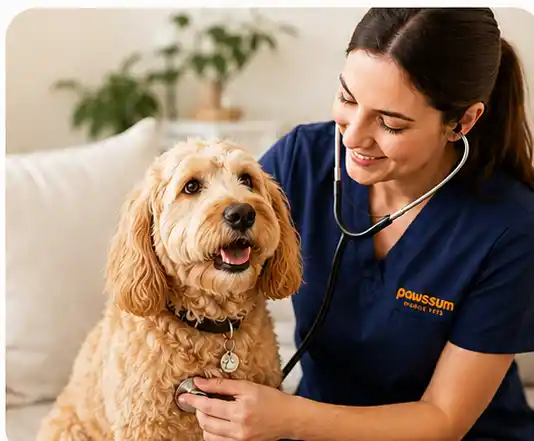
The following are the most common questions from pet owners in Australia regarding the care that can be provided by mobile vets.
1. How Much Does a Mobile Vet Cost?
The cost of a mobile vet in Australia usually depends on your location, the time of day, the type of appointment, travel distance and whether your pet needs medication, testing or procedures. As a general guide, standard home vet consultations in Australia commonly sit around the $125 to $170 range, although some providers may charge more for after-hours, urgent visits or longer appointments. Pawssum lists home visits from $159, with emergency or after-hours consultations from $349. Other Australian mobile vet providers publicly list standard home visit fees such as $139, $155, $159 or $170, depending on location and appointment type. (Pawssum pricing)
It’s important to understand what the price includes. A standard mobile vet consultation generally covers the vet’s travel, your pet’s history, a physical examination, discussion of findings and a treatment plan. Extra costs may apply for medications, injections, blood tests, urine tests, ear cytology, wound care, nail clips, microchipping, vaccination, pathology, euthanasia or aftercare.
As a vet, I always encourage owners to ask one simple question when booking: “What is included in the visit fee, and what might be extra?” That avoids surprises.
A good mobile vet visit is not just a quick look at your pet. The vet will observe how your pet moves around the home, check breathing, gums, hydration, pain signs, heart, lungs, abdomen, skin, ears, eyes, weight and behaviour. This can give very useful information, especially for older pets.
For example, a 13-year-old Labrador who struggles to get into the car may benefit from a home visit for arthritis assessment, pain relief and blood testing. A cat who hides for hours after car travel may be much easier to examine on the couch or in a quiet room.
Call a vet before booking if your pet is collapsed, struggling to breathe, having seizures, unable to urinate, bleeding heavily, very bloated, or showing severe pain. Those signs may need emergency hospital care, not a routine home visit.
2. Is Mobile Vet Care More Expensive Than Traditional Clinics?
Mobile vet care can sometimes cost more than a standard clinic consultation because the vet travels to you, brings equipment and allows time for care inside your home. But the better question is whether it gives the right value for your pet’s situation.
A traditional clinic has fixed equipment on-site, support staff, X-ray machines, surgery rooms, hospital cages and diagnostic tools. That setup is essential for many cases. A mobile vet has the advantage of convenience, reduced stress and seeing your pet in their normal environment. For anxious pets, senior dogs, cats who hate carriers, multi-pet households or owners with limited transport, that difference can be significant.
In Australia, published pricing from mobile vet providers shows standard home visits often starting from around $125 to $170, with after-hours or emergency-style home visits costing more. Pawssum, for example, lists standard consultations from $159 and emergency or after-hours consultations from $349.
Traditional vet clinic consult fees vary widely by suburb, city, opening hours and clinic type. In many cases, a routine clinic consult may be cheaper than a mobile vet visit. But the total cost to the owner may include transport, time off work, stress, waiting room exposure and the difficulty of moving a painful or fearful pet.
As a vet, I think of cost in terms of clinical value. If your dog has an itchy ear, a mobile vet may diagnose an ear infection, take a sample, clean the ear and start medication at home. That can be very efficient. If your cat is losing weight and drinking more, a mobile vet can often perform an examination and collect blood or urine at home. That may avoid a stressful trip and still give useful answers.
But if your pet may need surgery, X-rays, intravenous fluids, oxygen or hospital monitoring, the clinic or emergency hospital is the better value because the right equipment is already there.
Mobile vet care is not always cheaper. It is often more convenient, calmer and more suitable for certain pets. The best choice depends on your pet’s condition, urgency and what care may be needed next.
3. What Services Do Mobile Vets Offer?
Mobile vets offer much more than simple check-ups. In Australia, many home visit vets can manage a wide range of everyday health concerns for dogs and cats. Common services include wellness checks, vaccinations, puppy and kitten visits, senior pet assessments, arthritis reviews, skin and ear consultations, eye checks, minor wound care, nail clipping, anal gland checks, blood testing, urine testing, faecal testing, microchipping, medication reviews and quality-of-life assessments.
Some mobile vets also provide palliative care and peaceful at-home euthanasia. For many families, this is one of the most valued parts of home veterinary care. It allows a much-loved pet to remain in a familiar place, surrounded by their people, without the stress of a final car trip.
Pawssum describes its services as including sick pet exams, after-hours care, vaccinations and at-home euthanasia, and notes that its mobile vets provide care in the home for dogs and cats across Australia.
A mobile vet can often help with real-life situations such as a dog suddenly scratching at one ear, a cat urinating outside the litter tray, a senior dog slowing down on walks, a puppy needing vaccination, or an older cat losing weight. The vet can examine your pet, talk through the likely causes and decide whether home treatment is safe.
What mobile vets usually cannot do at home is just as important. Most cannot perform major surgery, dental procedures under anaesthetic, X-rays, CT scans, intensive care, oxygen therapy or hospitalisation in your living room. Some may perform minor procedures, but anything requiring sterile theatre conditions or general anaesthesia usually belongs in a clinic.
A good mobile vet will tell you when a home visit is enough and when referral is safer. For example, a mild skin infection may be treated at home. A dog with a swollen painful abdomen, pale gums and weakness needs urgent hospital care. A cat with suspected arthritis may be assessed at home. A cat who cannot pass urine needs an emergency clinic immediately.
The strength of mobile vet care is practical, personal veterinary attention in the pet’s own environment. The limitation is that some conditions need hospital equipment.
4. When Should I Call a Mobile Vet Instead of a Regular Clinic?
You should call a mobile vet when your pet needs veterinary attention but is stable enough to be seen at home. Mobile vet care is especially useful when travel is stressful, painful or difficult.
Good examples include anxious cats, dogs who panic in the car, senior pets with arthritis, large dogs who are hard to lift, pets recovering from illness, owners without easy transport, multi-pet households and end-of-life care. A home visit can also be helpful when the vet needs to understand your pet’s normal environment, such as mobility around slippery floors, access to stairs, toileting habits, appetite, sleep patterns and behaviour.
As a vet, I find home visits particularly useful for senior pets. Seeing how a dog gets up from their bed, walks across tiles, turns corners or climbs steps can reveal pain that may not appear in a clinic. With cats, watching how they move through the house or whether they jump onto furniture can give clues about arthritis, vision loss or weakness.
Call a mobile vet for issues such as mild vomiting or diarrhoea in an otherwise bright pet, itchy skin, ear problems, sore joints, coughing without breathing distress, reduced appetite, weight loss, vaccinations, general check-ups, medication reviews and palliative care discussions.
But choose a regular clinic or emergency hospital if your pet needs tests or treatment that cannot wait. Red flags include collapse, breathing difficulty, blue or pale gums, repeated seizures, severe bleeding, suspected poisoning, inability to urinate, severe bloating, major trauma, heatstroke, snake bite, eye injuries, labour complications, severe pain or sudden paralysis.
A mobile vet may still be able to advise you by phone, but the safest option may be direct hospital care.
Think of it this way. If your pet is uncomfortable but stable, a mobile vet may be ideal. If your pet is unstable, rapidly worsening or likely to need oxygen, imaging, surgery or IV fluids, go to a clinic or emergency hospital.
Good veterinary care is not about choosing mobile or clinic every time. It’s about choosing the safest setting for that pet on that day.
5. Can a Mobile Vet Do Surgery or Just Checkups?
Mobile vets can do much more than check-ups, but they usually do not perform major surgery at home. This is not because mobile vets lack skill. It’s because surgery often requires a sterile operating theatre, anaesthetic machines, trained support staff, oxygen, monitoring equipment, surgical lighting, controlled recovery areas and emergency backup.
At home, a mobile vet can usually perform a full physical examination, assess pain, prescribe medication, give injections, vaccinate, collect blood, collect urine, check ears, assess skin, manage some wounds, review lumps, trim nails if safe, provide arthritis treatment and guide palliative care. Some mobile vets may perform minor procedures depending on the pet, the home environment, the equipment required and local regulations.
However, procedures such as desexing, dental surgery, lump removals, fracture repair, abdominal surgery and any operation requiring general anaesthesia are usually best done in a clinic or hospital. Even a calm home is not the same as a surgical theatre.
As a vet, my thinking is always about risk. Can this be done safely at home? What happens if the pet reacts badly? Is there enough lighting, restraint, sterility and monitoring? If the answer is no, referral is the responsible choice.
For example, a mobile vet may examine a dog with a skin lump and perform a fine needle aspirate or recommend monitoring. But if the lump needs removal, that pet will likely need a clinic. A mobile vet may assess a cat with dental pain, prescribe pain relief or antibiotics where appropriate, then refer for dental X-rays and surgery. A mobile vet may clean and dress a small wound, but a deep bite wound may need anaesthesia, flushing, drainage and hospital care.
This is where mobile vets are very useful as a first point of care. They can assess the problem, start safe treatment where possible and help you avoid guessing. If your pet needs a clinic, a good mobile vet will explain why and help direct you to the right next step.
So no, mobile vets are not just for check-ups. But they are also not a replacement for a fully equipped hospital when surgery or advanced care is needed.
6. Mobile Vet for Senior Dogs: What to Expect
A mobile vet visit can be one of the best options for a senior dog. Older dogs often find car travel, slippery clinic floors, waiting rooms and standing for long periods difficult. A home visit lets the vet assess your dog where they are most comfortable.
During a senior dog visit, the vet will usually ask about appetite, drinking, urination, bowel habits, coughing, breathing, sleep, mobility, pain, behaviour, weight changes, lumps, medication and quality of life. Then they will perform a physical examination. This may include checking the heart, lungs, gums, teeth, eyes, ears, skin, abdomen, joints, spine, nails and body condition.
What makes a home visit especially useful is seeing the dog move naturally. A senior Labrador may look brave in a clinic but struggle to rise from the lounge room floor. A small terrier may be slipping on tiles. A German Shepherd may avoid stairs. These details matter because arthritis, muscle loss, neurological changes and pain are often easier to understand in the home.
The vet may recommend blood tests, urine tests, arthritis medication, weight management, joint support, nail trimming, changes to bedding, non-slip mats, ramps, diet changes or medication adjustments. For some dogs, the visit may focus on comfort and quality of life rather than cure.
A mobile vet can help with senior dog problems such as arthritis, stiffness, weakness, chronic skin disease, ear infections, coughing, weight loss, increased thirst, reduced appetite, dementia signs, incontinence and palliative care planning.
Call a vet urgently if your senior dog collapses, cannot stand, has pale gums, is breathing with effort, has a swollen abdomen, cries in pain, has repeated vomiting, cannot urinate, has seizures or suddenly becomes very weak. These signs may need hospital care.
For families facing end-of-life decisions, a mobile vet can also provide a gentle quality-of-life assessment at home. Sometimes the answer is more pain control, better support and time. Sometimes the kindest option is peaceful at-home euthanasia. A good vet will guide you clearly and compassionately, without pressure.
Senior pets deserve care that respects their comfort, dignity and limits. Home visits can make that care much easier.
FAQ
How much is a mobile vet visit in Australia?
Many standard mobile vet consultations in Australia are advertised from around $125 to $170, depending on the provider and location. Pawssum lists standard home visits from $159. After-hours or urgent visits usually cost more.
Are medications included in a mobile vet consultation?
Usually not always. The consultation fee often covers the visit, examination and advice. Medications, injections, pathology, testing, procedures and aftercare may be charged separately.
Can a mobile vet come after hours?
Some mobile vet providers offer after-hours or urgent care, depending on vet availability and location. If your pet is seriously unwell or unstable, an emergency hospital may be safer.
Can mobile vets treat cats?
Yes. Mobile vets are often very helpful for cats because many cats become highly stressed by carriers, car trips and clinic waiting rooms.
Can a mobile vet do blood tests at home?
In many cases, yes. Mobile vets can often collect blood at home and send it to a laboratory. Results may help assess kidneys, liver, diabetes, infection, anaemia, thyroid disease and general senior pet health.
When should I not use a mobile vet?
Do not wait for a mobile vet if your pet is struggling to breathe, collapsed, having seizures, unable to urinate, bleeding heavily, severely bloated, poisoned, hit by a car or in extreme pain. Go to an emergency vet hospital.
Is a mobile vet good for euthanasia?
Yes, for many pets and families. At-home euthanasia can allow a pet to pass peacefully in a familiar place, surrounded by family. It is especially helpful for senior pets, anxious pets and pets who find travel painful.
Last reviewed by vet 02-June-2026
By Dr. Jessica Goh - BVSc/DVM, registered veterinarian
Last updated on 3rd August 2026
About the author


Dr Jessica Goh is an experienced Melbourne mobile veterinarian with 12 years in small animal practice and a strong background across general practice, veterinary internships, and emergency care. A University of Melbourne-trained veterinarian, Dr Jessica brings calm clinical judgement, gentle handling, and clear communication to every home visit. She is especially valued for helping pets and families feel supported during stressful health concerns, senior pet care, urgent consultations, and compassionate end-of-life appointments. Through Pawssum, Dr Jessica provides professional, reassuring veterinary care in the comfort of your pet’s own home.
Our company
Open 7 days a week from 6:00am to 11:00pm including public holidays
© 2026 Pawssum Pty Ltd. All rights reserved.