Bird Flu and Pets in Australia: What to Do in 2026
yes, but it is very uncommon for dogs and cats to catch H5 bird flu. There have been no cases of pets in Australia contracting the virus so far.
Furthermore, cats are more susceptible to the virus than dogs, and the majority of infected animals overseas have either been in contact with infected birds or raw products containing infected raw animals’ products.
As at 25 August 2026, there have been no confirmed cases of H5N1 in dogs or cats in Australia. However, the situation in Australia has rapidly changed with the detection of the H5N1 virus in wild birds in Australia, as well as in a mammal in Australia on 23 August 2026 - a long-nosed fur seal found on the coast in South Australia.
For the majority of pet owners, there is no need to panic about the presence of the H5N1 virus in Australia, or to stop taking their dogs for walks. However, there are a few precautions that can be undertaken to reduce the risk of infection, particularly for those dogs that have regular access to coastal beaches, wetlands or wildlife, or for those cat owners whose cats have hunting behaviors towards birds.
Information current as at 25 August 2026. H5N1 is an evolving situation, and the advice provided may change at any time.
Bird flu and Australian pets: quick answers
|
Question |
Answer |
|---|---|
|
Can dogs catch H5N1 bird flu? |
Yes, but infection appears to be uncommon. |
|
Can cats catch H5N1? |
Yes. Cats appear to be more susceptible than dogs. |
|
Have Australian dogs or cats caught H5N1? |
No confirmed cases have been reported as at 25 August 2026. |
|
How are pets most likely to be exposed? |
Contact with or eating infected birds or animals, or consuming contaminated raw animal products. |
|
Should I keep my cat indoors? |
Yes. Keeping cats contained significantly reduces contact with wild birds. |
|
Can I still walk my dog? |
Yes. Keep your dog on lead around wildlife, beaches, wetlands and areas where sick or dead birds have been reported. |
|
What if my dog picks up a dead bird? |
Stop further contact, don't handle the bird with bare hands and call your vet for advice, particularly if your dog becomes unwell. |
|
What number do I call about sick or dead wildlife? |
Emergency Animal Disease Hotline: 1800 675 888. |
What is H5N1 bird flu?
Bird flu is another term for avian influenza. The strain of avian flu currently in Australia is the highly pathogenic strain H5N1, clade 2.3.4.4b. This strain is often referred to as H5N1 or H5 bird flu.
Although alarming, this strain primarily affects birds.
Beyond the bird species, the H5N1 strain has also infected various mammal species, including cats, dogs, dairy cattle, foxes and various species of marine mammals.
Australia has avoided this strain of H5N1 flu for some time. However, this changed in 2026.
What has happened with H5N1 in Australia?
The H5N1 flu strain was confirmed in wild birds in mainland Australia in June of 2026.
Since then, further detections of H5N1 in Australian wild birds, including local bird species, have occurred.
On the 23 August 2026, CSIRO confirmed that H5N1 bird flu was present in a long-nosed fur seal that was found dead at Beachport in South Australia. This marked the first time that H5N1 was confirmed in an indigenous Australian mammal.
However, this does not indicate the spread of bird flu to Australian dogs and cats.
As of the 25 August 2026, the following is confirmed by various authorities in Australia:
- H5N1 bird flu detected in wild birds of Australia
- H5N1 bird flu confirmed in a wild mammal of Australia
- No confirmed cases of H5N1 in dogs and cats of Australia
- No detections of H5N1 in Australian poultry or livestock
- The risk of the virus to the general public is considered to be low by the Australian Centre for Disease Control
For pet owners, the important point is that the avian flu virus is now in Australian wildlife. Therefore, avoiding contact with wildlife that is ill or deceased becomes even more important.
Can cats get bird flu?
Yes.
When it comes to exposure to the H5N1 strain of bird flu, cats concern us more than dogs.
Biologically, cats are more susceptible to the virus than dogs. But, their instinct to hunt birds and small animals means that they have more contact with infected wildlife.
In other countries, cats have contracted the virus after exposure to infected birds and other animals, as well as through the consumption of raw poultry products and unpasteurised milk.
Some infections in cats have been severe.
This is one of the reasons that we would recommend keeping cats indoors when H5N1 is circulating within Australian native wildlife. A cat run or catio may be an option for cats that are accustomed to spending time outdoors.
In addition to protecting the cats of Australia, this recommendation also provides an added benefit of protecting Australian native wildlife.
Can dogs get bird flu?
They also can, but it is significantly less common than with cats.
Many of those dogs have travelled overseas and are scavenging for food or even chewing on infected birds or animals.
For the average dog in Australia that goes for a walk in the neighborhood, the risk is very low.
I'd be more cautious with dogs that regularly run off lead along beaches, around lakes or wetlands, or in areas with large wild bird populations.
Dogs are naturally curious. A dead seabird on the beach can be extremely interesting to a Labrador, even if we'd rather it wasn't.
Keeping your dog on lead around wildlife will dramatically reduce the chance of such encounters.
My dog picked up or ate a dead bird. What should I do?
This is probably the question I'd expect Australian vets to start hearing more often.
First, don’t panic. Your dog picking up a bird does not mean that it has caught H5N1.
Try to prevent any further contact with the bird. Do not handle sick or dead wild birds with your bare hands.
If your dog ate part of the bird or had contact with a sick or dead bird, call your veterinarian to discuss any treatment options.
Mention the following to your veterinarian:
- Where the bird contact occurred
- What type of bird it was (if you know the type)
- Whether the bird was dead
- Whether your dog ate any of the bird
- When this contact occurred
- Whether your dog is experiencing any ill effects currently
Your vet can then tell you whether your dog can be monitored at home or requires examination.
Should your dog become unwell after contact with a sick or dead bird, tell the veterinary clinic about your cat’s contact with the bird before arriving at the clinic.
My cat caught or ate a bird. Should I be worried?
Catching a bird does not necessarily mean that your cat has been exposed to H5N1.
The wild birds that live in Australia are not infected with H5N1.
Cats are more susceptible to H5N1 than dogs, so any significant contact my your cat with a sick or dead bird would be of concern.
If your cat has eaten a bird and is showing symptoms, contact your vet and tell them about the bird.
The fact that your cat has shown signs of illness after exposure to a bird is far more relevant to your vet than the fact that your cat had contact with a bird in the first place.
Symptoms of bird flu in dogs and cats
The symptoms of H5N1 in dogs and cats are not specific to that disease. According to the Australian Government’s website dedicated to providing veterinary guidance and information, the symptoms of bird flu in dogs and cats may include:
- Fever
- Lethargy
- Loss of appetite
- Red or inflamed eyes
- Discharge from the eyes or nose
- Coughing or sneezing
- Difficulty breathing
- Tremors
- Seizures
- Stumbling or lack of coordination
- Blindness
- Severe and rapid illness developing in the cat or dog
Neurological signs have been particularly concerning in some of the infected cats that have been found overseas.
But this needs some perspective.
These symptoms are not specific to bird flu.
A lethargic dog or cat that has stopped eating is more likely to have some common condition than H5N1.
The detail in the medical history that would make me pay closer attention would be something like:
“My cat has recently become unwell but was playing with a sick seabird two days ago.”
That is very different from an indoor cat that has no wildlife exposure and has been off its food for only a day.
When should I call a vet?
If your cat or dog have come into contact with a sick or dead wild bird and subsequently develop any of the following:
- lethargy
- loss of appetite
- breathing difficulties
- eye or nasal discharge
- tremors
- seizures
- loss of balance
- changes in behaviour
- any severe illness
tell your vet about the potential for exposure to the bird.
If your pet is struggling to breathe, experiencing seizures or otherwise collapsing and unwell, this is an emergency situation - regardless of whether you think bird flu is the cause.
Can my dog or cat give bird flu to me?
The risk of bird flu to the general Australian public is currently considered to be low.
Cases of H5 flu in humans are very rare and usually involve close contact with the infected animals.
There have been no reported cases of the H5N1 strain of bird flu currently in Australia’s native wildlife.
In the event that your pet may have been exposed to the wild animals that have tested positive for the virus, you should avoid close contact with your pet until you have consulted with your veterinarian. Always wash your hands after interacting with your pet or anything in their environment that may be exposed to their bodily fluids.
If you personally have contact with a sick or dead wild bird or animal, don’t cuddle your pets while wearing the same clothing that you used to contact those sick or dead birds or animals. Shower and change clothes first.
Should I stop walking my dog?
No. There is no reason for dogs to stop walking.
I would just change how you walk your dog in environments with higher risks of exposure to the virus.
Keep your dog on lead around:
- beaches
- wetlands
- lakes
- waterways
- large groups of wild birds
- areas with sick or dead birds
Don’t let your dog sniff, lick, pick up or eat dead wildlife. This is good advice regardless of the risks of bird flu. Dead wildlife can pose risks for dogs, too.
Should I keep my cat indoors?
Yes. According to the Australian Government, cats should be kept indoors to reduce the risk of exposure to H5 avian bird flu.
If your cat currently roams the outdoors, you can try putting your cat into an outdoor enclosure or giving your cat supervised time outside.
If your cat stays indoors and does not eat raw poultry products, there is very little risk of your cat getting infected with the H5N1 strain of bird flu.
What about raw pet food?
This deserves some attention because H5N1 isn't only transmitted through encounters with wild birds.
Overseas, infected or contaminated raw animal products have been associated with H5N1 infections in cats.
Australian Government veterinary guidance notes that infected dogs and cats overseas have sometimes had a history of consuming raw pet food or unpasteurised milk.
For that reason, I would avoid feeding pets raw poultry or unpasteurised animal products while H5N1 is circulating.
Proper cooking inactivates avian influenza viruses and significantly reduces the infection risk associated with raw poultry.
If your pet eats a commercial diet, don't suddenly change everything because you've read about bird flu online. Speak with your vet if you're unsure about your pet's diet.
Keep wildlife away from pet food and water
This one is easy to overlook.
Don't leave pet food and water bowls where wild birds can routinely access them.
Birds can drink from water bowls, eat pet food and contaminate the area with saliva, feathers, respiratory secretions or droppings.
Where practical, keep food and water indoors or under cover and clean outdoor bowls regularly.
What if I keep backyard chickens or pet birds?
If you own chickens or other birds as well as dogs or cats, separation becomes more important.
Try to prevent your pets from entering poultry housing, eating bird feed, drinking from poultry water sources or accessing sick or dead birds.
Good biosecurity around backyard poultry is particularly important now that H5N1 is circulating in Australian wild birds.
Requirements and control measures can also change depending on where you live, so check the current advice from your state or territory agriculture department.
If one of your chickens or pet birds suddenly becomes very sick or you notice unusual deaths among several birds, don't immediately handle them. Contact the Emergency Animal Disease Hotline for advice.
What should I do if I find a sick or dead wild bird?
Don't touch it.
The Australian Government's advice is straightforward:
Avoid. Record. Report.
Keep yourself and your pets away.
If appropriate, take a photo or video from a safe distance and note the location.
Suspected H5 bird flu can be reported to the 24-hour Emergency Animal Disease Hotline on 1800 675 888.
This is especially important if you see multiple sick or dead birds or other wildlife.
Should my dog or cat be tested for bird flu?
Not routinely.
There is no reason to test a healthy dog or cat simply because H5N1 has been detected in Australian wildlife.
Testing becomes more relevant when there is a combination of:
a credible exposure + compatible illness.
For example, a cat that has recently eaten a sick bird and subsequently develops neurological signs deserves veterinary investigation.
Your veterinarian can discuss the case with the relevant animal health authorities if H5N1 is genuinely suspected.
Bird flu is a notifiable animal disease in Australia, which means veterinarians have reporting obligations when they suspect an animal may be infected.
A vet's perspective on the current risk
For most Australian dogs and cats, H5N1 is still a low-probability explanation for illness.
If a dog is lethargic, there are many conditions I'd consider before bird flu. The same applies to a cat that stops eating.
What changes the picture is the history.
A pet that has had recent direct contact with a sick or dead bird, particularly followed by respiratory or neurological symptoms, deserves more caution.
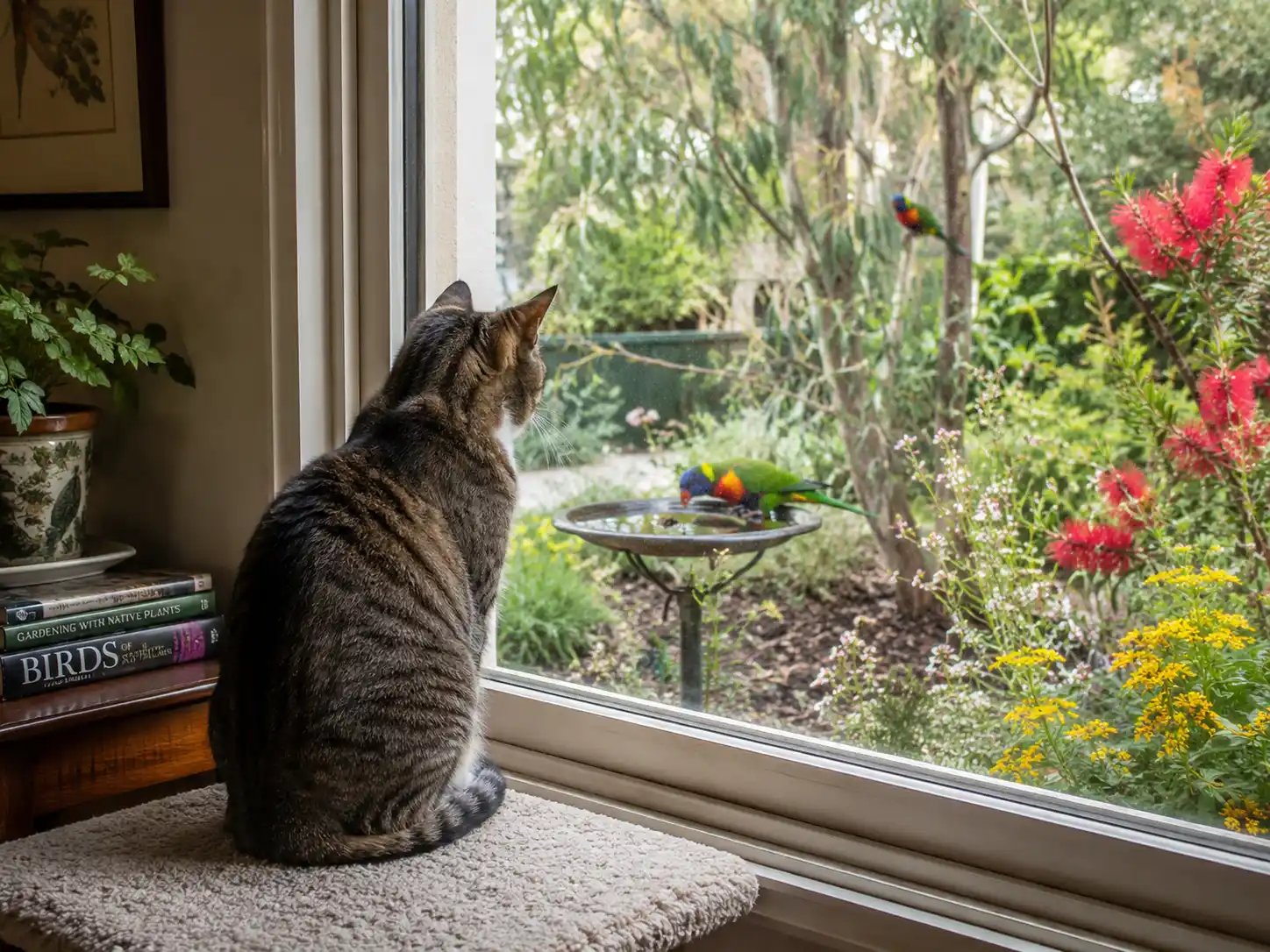
So I wouldn't be frightened to walk the dog or have the cat sitting by the window watching birds.
I would be much less relaxed about letting the dog eat something dead on the beach or allowing an outdoor cat to hunt seabirds while H5N1 is circulating.
That's really where the practical advice sits.
Frequently asked questions
Can my cat get bird flu from a bird in the garden?
It is possible if the bird is infected and your cat has close contact with it, particularly if the cat catches or eats the bird. Keeping cats indoors or otherwise contained substantially reduces this risk.
Can my dog get H5N1 bird flu?
Yes, dogs can become infected, but reported infections are uncommon and appear to occur less frequently than in cats. Avoid letting dogs touch or eat sick or dead wildlife.
My dog sniffed a dead bird. Does it need to be tested?
Not necessarily. Brief contact doesn't automatically mean infection. Prevent further contact and speak with your vet if there was significant exposure or your dog subsequently becomes unwell.
My dog ate a dead bird. Is that an emergency?
Not automatically, but call your veterinarian for advice and explain exactly what happened. If your dog develops breathing difficulties, severe weakness, neurological signs, seizures or other serious symptoms, seek urgent veterinary care.
Is raw pet food safe while H5N1 is circulating?
There is evidence from overseas that contaminated raw animal products can transmit H5N1 to cats. I would avoid raw poultry and unpasteurised animal products. Properly cooked food is the safer option.
Can I catch bird flu from my dog or cat?
The current risk is considered very low. Human infection with H5 bird flu is rare and generally involves close exposure to infected animals or contaminated environments. Use sensible hygiene and contact your doctor if you have had a significant exposure and subsequently become unwell.
Has an Australian dog or cat caught H5N1?
There have been no confirmed H5N1 infections in Australian dogs or cats as at 25 August 2026.
Australia did confirm its first H5N1 infection in a local mammal on 23 August 2026, in a long-nosed fur seal found at Beachport, South Australia.
Do I need to stop taking my dog to the beach?
No, but keep your dog under control and preferably on lead where wild birds are present. Don't allow your dog to approach sick or dead wildlife.
Should I stop my cat going outside?
Containing cats indoors or in a secure enclosure is currently recommended and substantially reduces the chance of contact with infected wildlife.
Worried about your pet?
If your dog or cat is unwell, a veterinarian can help work out what's actually going on rather than trying to diagnose the cause from symptoms alone.
Pawssum's mobile vets can examine pets at home across many Australian metropolitan areas.
If your pet has recently been in contact with a sick or dead bird or other wildlife, tell us when you book. That information is important and allows the veterinarian to plan appropriately before arriving.
If your pet is seriously unwell, struggling to breathe, collapsing, having seizures or experiencing another emergency, seek urgent veterinary care.
Trusted Australian sources for H5N1 updates
Because the H5N1 situation is changing, official government information should take priority over older articles or social media posts.
For current information, check:
- Australian Government Department of Agriculture, Fisheries and Forestry, H5 bird flu updates
- Australian Government Department of Agriculture, Fisheries and Forestry, Help protect against bird flu
- Australian Government Department of Agriculture, Fisheries and Forestry, Vets and bird flu
- Australian Centre for Disease Control, Bird flu (avian influenza)
- Wildlife Health Australia, H5 bird flu
- Australian Veterinary Association, High pathogenicity avian influenza
- your state or territory agriculture and biosecurity authority
Emergency Animal Disease Hotline: 1800 675 888
By Dr. Jessica Goh - BVSc/DVM, registered veterinarian
Last updated on 12th September 2026
About the author


Dr Jessica Goh is an experienced Melbourne mobile veterinarian with 12 years in small animal practice and a strong background across general practice, veterinary internships, and emergency care. A University of Melbourne-trained veterinarian, Dr Jessica brings calm clinical judgement, gentle handling, and clear communication to every home visit. She is especially valued for helping pets and families feel supported during stressful health concerns, senior pet care, urgent consultations, and compassionate end-of-life appointments. Through Pawssum, Dr Jessica provides professional, reassuring veterinary care in the comfort of your pet’s own home.
Our company
Open 7 days a week from 6:00am to 11:00pm including public holidays
© 2026 Pawssum Pty Ltd. All rights reserved.