When a Routine Vet Visit Reveals a Chronic Illness in Pets
Most pet owners book a vet visit hoping for reassurance.
Maybe it’s a vaccination. Maybe it’s an annual health check. Maybe there’s a small concern you’d like your vet to look at.
But sometimes, a routine visit uncovers something unexpected.
A heart murmur. An abnormal blood test. Weight loss that suddenly makes more sense. A change in behaviour that turns out to be more than “just ageing.”
And then, quite suddenly, you’re being told your much-loved pet may have a chronic illness.
That moment can be hard to take in.
Even when your vet explains everything gently and clearly, it’s normal to feel overwhelmed. You’re worried about your pet, trying to understand medical terms, thinking about treatment options, and wondering what this means long term.
A lot of pet parents only absorb part of the conversation at the time. That’s completely understandable.
This article explains some of the more common chronic diseases seen in dogs and cats, so you can come back to the information when you’re ready.
Important note: every pet is different. The signs listed below are examples of what vets commonly see. They aren’t enough to diagnose a condition on their own. If you’re worried about your pet, speak with a veterinarian.
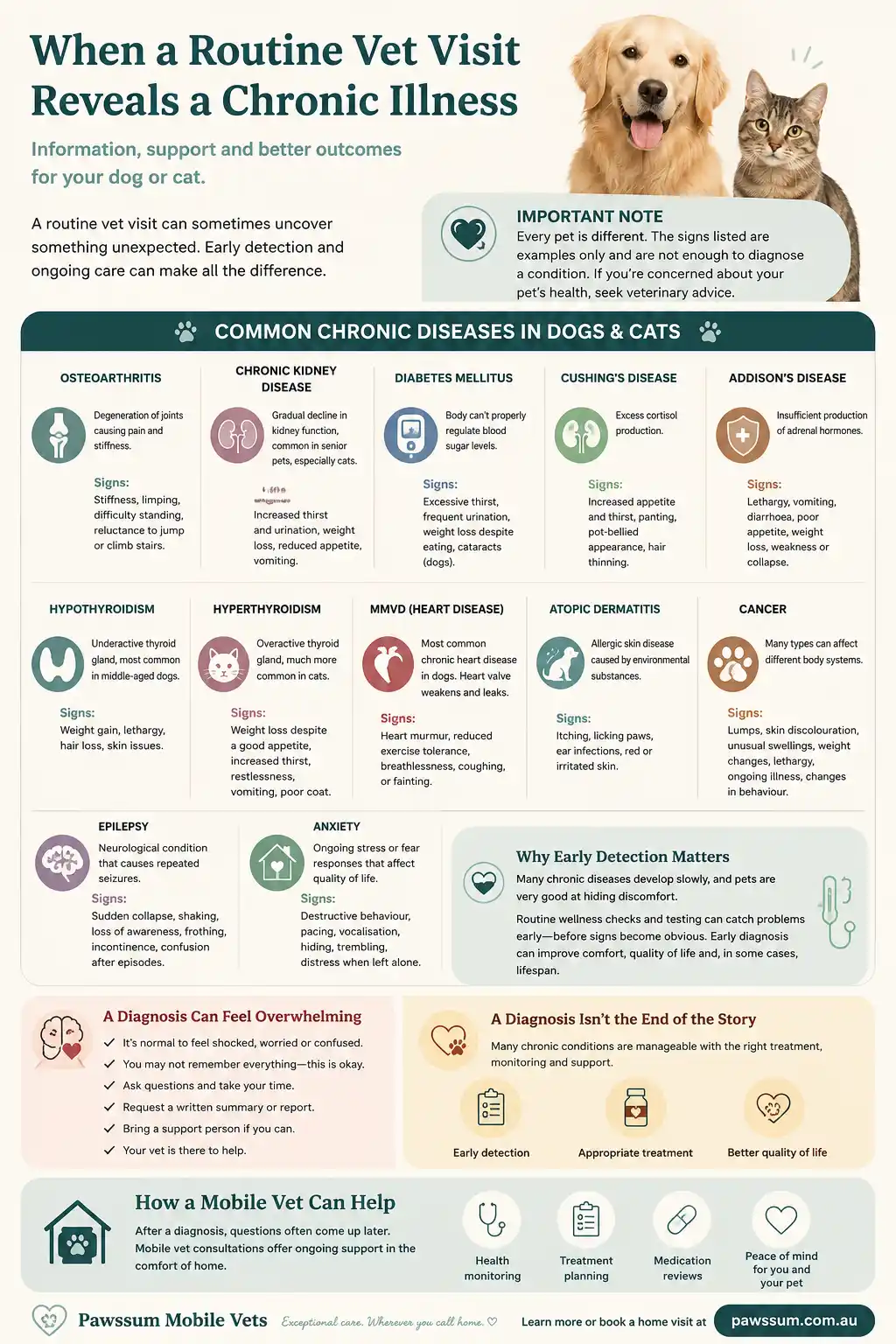
Common Chronic Diseases in Dogs and Cats
Osteoarthritis
Osteoarthritis is a progressive joint disease caused by cartilage breakdown and inflammation inside the joints.
It can have a big impact on your pet’s comfort, movement, and quality of life.
Common signs include stiffness, limping, trouble getting up, and reluctance to jump, climb stairs, or go for walks. Many owners mistake these changes for normal ageing, especially in older dogs and cats.
Treatment often focuses on weight control, anti-inflammatory medication, joint support, physiotherapy, and changes around the home to make movement easier.
Chronic Kidney Disease
Chronic kidney disease is a gradual decline in kidney function. It’s often seen in senior dogs and is especially common in older cats.
The kidneys help filter waste products and regulate fluid balance. In the early stages, kidney disease may not cause obvious signs, which is why routine blood and urine testing can be so helpful.
Common signs can include increased thirst, more frequent urination, weight loss, reduced appetite, and vomiting.
Management may include prescription renal diets, hydration support, medication, and regular monitoring.
Diabetes Mellitus
Diabetes is a chronic condition where the body can’t properly regulate blood sugar levels.
It does require ongoing treatment and monitoring, but many pets with diabetes can still do very well once the condition is managed.
Common signs include excessive thirst, frequent urination, weight loss despite eating, and cataracts, particularly in dogs.
Treatment usually involves insulin injections, a controlled diet, and regular glucose monitoring.
Cushing’s Disease
Cushing’s disease, also called hyperadrenocorticism, is a hormonal disorder caused by the body producing too much cortisol.
It often develops slowly, which means the signs can be easy to miss or mistake for normal ageing.
Common signs include increased appetite, increased thirst, panting, a pot-bellied appearance, and thinning hair.
Management usually involves medication and regular monitoring. In some cases, surgery may be considered.
Addison’s Disease
Addison’s disease, also called hypoadrenocorticism, happens when the adrenal glands don’t produce enough important hormones, including cortisol and aldosterone.
It can be life-threatening if left untreated. The good news is that many pets respond very well once the condition is diagnosed and properly managed.
Common signs include lethargy, vomiting, diarrhoea, poor appetite, weight loss, increased thirst, weakness, or collapse.
Treatment usually involves lifelong hormone replacement therapy, regular monitoring, and medication adjustments when needed.
Hypothyroidism
Hypothyroidism happens when the thyroid gland is underactive. It’s most commonly seen in middle-aged dogs.
Low thyroid hormone levels can slow metabolism and affect energy, skin, and coat health.
Common signs include weight gain, low energy, hair loss, and skin problems.
Treatment is usually daily thyroid hormone replacement, which is often very effective.
Hyperthyroidism
Hyperthyroidism happens when the thyroid gland is overactive. It’s much more common in cats than dogs and is often caused by a benign thyroid tumour.
Too much thyroid hormone speeds up metabolism and can place strain on several body systems.
Common signs include weight loss despite a good appetite, increased thirst, restlessness, vomiting, hyperactivity, and poor coat condition.
Management may include medication, prescription diets, radioactive iodine treatment, or surgery in selected cases.
Myxomatous Mitral Valve Disease
There are many types of heart disease in dogs and cats. Myxomatous mitral valve disease, often called MMVD, is the most common chronic heart disease in dogs.
With MMVD, one of the heart valves gradually weakens and leaks. Over time, this can put extra strain on the heart.
One of the first signs is often a heart murmur, which your vet can hear with a stethoscope.
Other signs may include reduced exercise tolerance, breathlessness, tiredness, fainting, coughing, or a faster breathing rate while sleeping.
Management can include heart medication, regular monitoring, and lifestyle changes.
Atopic Dermatitis
Atopic dermatitis is a chronic inflammatory skin condition caused by allergic reactions to things in the environment, such as pollen, dust mites, mould spores, or grasses.
It’s most common in dogs, but cats can be affected too.
Although it’s often a lifelong condition, it can usually be managed well with the right treatment plan.
Common signs include ongoing itching, paw licking, ear infections, red skin, and irritated skin.
Management may include allergy control, medicated shampoos, diet changes, and anti-itch medication.
Cancer
Like people, pets can develop many different types of cancer.
Cancer becomes more common with age, but it can happen at any stage of life.
Signs vary a lot depending on the type of cancer and where it is in the body. Possible signs include lumps, skin discolouration, unusual swellings, unexplained weight change, tiredness, ongoing illness, or changes in behaviour.
Treatment depends on the cancer type and stage. It may involve surgery, chemotherapy, radiation therapy, immunotherapy, or palliative care.
Epilepsy
Epilepsy is a neurological condition that causes repeated seizures.
It’s often diagnosed after other possible causes of seizures have been ruled out.
Common signs include sudden collapse, shaking, loss of awareness, frothing at the mouth, incontinence during an episode, and confusion afterwards.
Management usually involves long-term anti-seizure medication and regular monitoring.
Anxiety
Anxiety is a behavioural and emotional condition involving ongoing stress or fear responses.
It can seriously affect quality of life, both for pets and their owners.
Common signs include destructive behaviour, pacing, excessive vocalisation, drooling, distress when left alone, hiding, trembling, and ongoing fear after a perceived threat has passed.
Management may include behaviour modification, environmental changes, training support, and medication when appropriate.
Why Early Detection Matters
Many chronic diseases develop slowly.
Pets are also very good at hiding discomfort. They often adapt quietly, which means signs can be subtle for months or even years.
Routine vet checks and wellness testing can detect health problems before symptoms become obvious. Early diagnosis may allow treatment to start sooner, which can help protect comfort, quality of life, and in some cases, lifespan.
Why a Diagnosis Can Feel So Overwhelming
A vet consultation isn’t only medical. It’s emotional too.
While your vet is explaining test results, treatment options, and what may happen next, you may also be dealing with fear, shock, financial concerns, and uncertainty about the future.
That’s a lot to process at once.
It’s very common to leave the appointment and later realise you can’t remember everything that was said. That doesn’t mean you weren’t listening. It means you were trying to take in difficult information while worrying about someone you love.
What Can Help During the Appointment
If your pet is diagnosed with a chronic illness, it’s okay to slow the conversation down.
Ask questions. Request a written summary of the diagnosis and treatment plan. Ask for an email or printed discharge report. Repeat the key points back to your vet so you can check that you’ve understood them properly.
It can also help to bring a friend or family member, especially if you know the appointment may involve test results or a serious discussion.
And if you think of questions later, that’s normal too. Your vet would much rather you ask than sit at home feeling unsure.
A Diagnosis Isn’t the End of the Story
Hearing that your pet has a chronic illness can be frightening.
But many chronic conditions are very manageable with modern veterinary care. With early diagnosis, the right treatment plan, and regular monitoring, many pets can continue to enjoy a happy and comfortable life for years.
The goal is to help your pet keep living well.
How a Mobile Vet Can Help
After a diagnosis, questions often come up later, once you’ve had time to think.
Mobile vet consultations give you the chance to talk through your concerns in a familiar, calmer environment. This can be especially helpful for senior pets, anxious pets, or pets with mobility issues.
Pawssum vets can help with ongoing monitoring, treatment planning, medication reviews, and explaining your pet’s condition in a way that feels easier to understand.
All from the comfort of home.
By Dr Olivia Kappel - BVSc/DVM, registered veterinarian
Last updated on 3rd June 2026
About the author

Dr Olivia Kappel is a Veterinarian with Pawssum Mobile Vets, providing trusted veterinary advice and support to pet owners from the comfort of home. Based in NSW, and educated at the University of Sydney, Dr Olivia brings practical small-animal experience and a calm, compassionate approach to helping families understand their pet’s health concerns and next steps. Her work with Pawssum supports accessible, stress-free veterinary care for dogs and cats across Australia.
Our company
Open 7 days a week from 6:00am to 11:00pm including public holidays
© 2026 Pawssum Pty Ltd. All rights reserved.