Can a Mobile Vet Treat Serious Pet Conditions?
Can a Mobile Vet Actually Handle Serious Conditions, or Just Routine Care?
Many pet owners assume a mobile vet is only for vaccinations, check-ups, or end-of-life care. The truth is, a mobile vet can often help with a much wider range of pet health concerns than people expect.
At Pawssum Mobile Vets, our vets regularly assess and treat pets at home for problems such as ear infections, skin conditions, urinary issues, gastrointestinal upsets, respiratory symptoms, arthritis, diabetes management, medication reviews, mobility problems, and more.
A home visit does not replace every part of a veterinary hospital. Some pets need X-rays, ultrasound, surgery, oxygen therapy, blood pressure monitoring, hospitalisation, or emergency intensive care. But for many common and moderately serious conditions, a mobile vet can be an excellent first point of care.
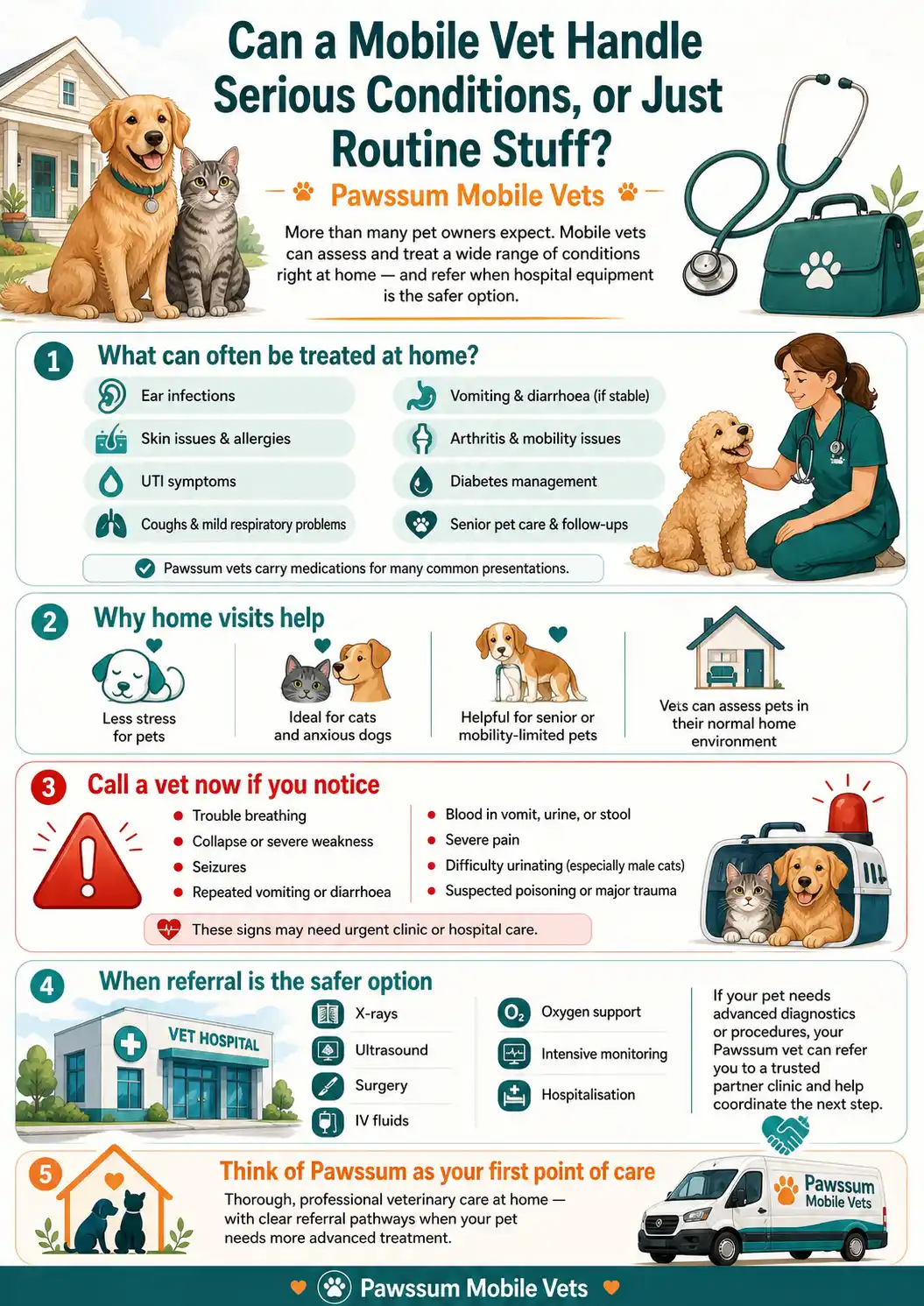
What Can a Mobile Vet Treat at Home?
A Pawssum mobile vet can help with many conditions that worry pet owners, especially when the pet is still stable enough to be seen at home.
Common examples include:
- Ear infections
- Skin rashes, itching, hot spots, and allergies
- Minor wounds or skin lumps
- Urinary tract symptoms
- Vomiting or diarrhoea when the pet is otherwise stable
- Coughing, sneezing, or mild respiratory signs
- Limping, arthritis, stiffness, or mobility concerns
- Eye irritation or discharge
- Diabetes management and medication support
- Senior pet check-ups and quality-of-life assessments
- Appetite changes or weight loss
- Behavioural changes that may be linked to pain or illness
- Pet euthanasia
The major advantage is that the vet sees your pet in their normal home environment. This can be especially helpful for cats, anxious dogs, senior pets, pets with mobility issues, or families who find it difficult to travel to a clinic.
How a Vet Thinks During a Home Visit
When a vet visits your home, they are not just looking at one symptom. They are asking: Is this pet stable? What is the most likely cause? What can safely be treated now? What needs further testing or hospital care?
For example, a dog with diarrhoea may simply have a mild stomach upset, but the vet will also think about dehydration, pain, pancreatitis, toxins, infection, foreign body obstruction, or other underlying disease.
A cat urinating more often may have a urinary tract infection, but the vet also needs to consider bladder inflammation, kidney disease, diabetes, crystals, or a blocked bladder in male cats.
That clinical judgement is one of the most important parts of the visit. The vet’s job is not only to treat the obvious problem, but to identify whether there are warning signs that mean the pet needs more advanced care.
Do Pawssum Vets Carry Medication?
Yes. Pawssum mobile vets carry medications for many common presentations, which means treatment can often begin during the home visit.
Depending on the case, this may include medication for infection, pain relief, inflammation, nausea, skin irritation, ear problems, arthritis, or other common conditions.
Not every medication is suitable for every pet. The vet will choose treatment based on your pet’s age, symptoms, examination findings, medical history, and any possible risks.
Real-Life Examples of Home Vet Care
A cat with an ear infection may be too stressed to travel comfortably. A mobile vet can examine the ear, check for pain or discharge, and provide treatment at home.
A senior Labrador struggling to stand may need an arthritis assessment, pain relief plan, and advice on mobility support around the house.
A dog with vomiting may be assessed for hydration, abdominal pain, temperature, gum colour, and overall alertness. If the dog is bright and stable, home treatment may be appropriate. If the dog is collapsed, painful, or repeatedly vomiting, the vet may recommend urgent hospital care.
A cat losing weight may need a physical exam, discussion of appetite and drinking habits, and possibly blood testing. If further diagnostics are required, the vet can guide you on the next step.
When Can a Mobile Vet Be the Right First Step?
A mobile vet may be a good option when your pet is unwell but not in immediate danger.
This includes situations such as:
- Your pet is itchy, sore, or uncomfortable but still alert
- Your dog has mild diarrhoea but is drinking and behaving normally
- Your cat has a skin or ear issue and becomes very stressed travelling
- Your senior pet needs pain management or quality-of-life support
- Your pet needs follow-up care for an ongoing condition
- You are unsure whether the issue is urgent and want a vet assessment
For many families, having the vet come to the home reduces stress and helps the vet see the pet’s real behaviour, mobility, environment, and daily routine.
What Can Sometimes Be Managed at Home?
Some mild symptoms can be monitored briefly at home, as long as your pet is bright, eating or drinking, breathing normally, and not in obvious pain.
For example, a single mild vomit in an otherwise happy dog may not always be an emergency. Mild itching, a small skin rash, or gradual stiffness in an older pet may be suitable for a home vet appointment.
However, “wait and see” is not always safe. Pets often hide pain or illness, especially cats. If symptoms are worsening, repeated, painful, or unusual for your pet, it is better to speak with a vet.
Signs That Mean Call a Vet Now
You should seek urgent veterinary advice if your pet has:
- Trouble breathing
- Collapse, extreme weakness, or inability to stand
- Seizures
- Repeated vomiting or diarrhoea
- Blood in vomit, urine, or stool
- A swollen or painful abdomen
- Pale, blue, or very dark gums
- Severe pain or crying
- Suspected poisoning
- Difficulty urinating, especially in male cats
- Major trauma, such as a fall, bite wound, or car accident
- Sudden paralysis or inability to walk
- Heatstroke signs, such as heavy panting, weakness, drooling, or collapse
In these situations, hospital care may be safer because your pet may need oxygen, imaging, surgery, IV fluids, intensive monitoring, or emergency treatment.
When a Clinic or Hospital Is the Safer Option
A mobile vet can do a lot, but some conditions need hospital equipment.
Your Pawssum vet may refer your pet to a partner clinic or emergency hospital if your pet needs:
- X-rays
- Ultrasound
- Surgery
- Dental procedures under anaesthetic
- IV fluids
- Oxygen support
- Intensive monitoring
- Advanced blood testing or imaging
- Emergency stabilisation
- Hospitalisation overnight
This is not a failure of home care. It is good veterinary judgement. The right care means choosing the safest setting for your pet’s condition.
How Pawssum Coordinates Referral Care
If your pet needs care beyond what can be done at home, the Pawssum vet can explain the concern clearly and recommend the next step.
Where appropriate, your pet may be referred to one of Pawssum’s trusted partner clinics or a local emergency hospital. This gives pet owners a practical pathway: start with a calm home assessment, then move to clinic care if hospital equipment or advanced treatment is needed.
Think of Pawssum as your first point of care: professional, thorough, and convenient at home, with referral options when a clinic is the safer place to continue treatment.
Why Home Visits Can Be Better for Some Pets
Home vet care is especially helpful for pets who become anxious, frightened, or difficult to transport.
Cats often hide illness and may become extremely stressed in the car or waiting room. Senior dogs may struggle with slippery clinic floors, stairs, or getting in and out of the car. Some pets behave very differently in a clinic than they do at home.
At home, the vet can observe your pet in their normal surroundings. They can see how your dog walks on familiar floors, where your cat hides, how your pet interacts with family members, and what their daily environment looks like.
That context can be clinically useful, especially for arthritis, anxiety, senior pet care, chronic illness, and quality-of-life assessments.
Is a Mobile Vet Only for Routine Care?
No. Routine care is only one part of what mobile vets do.
Pawssum mobile vets can provide vaccinations, health checks, and preventative care, but they can also assess and treat many genuine medical problems at home.
The key question is not whether the condition sounds “serious.” The key question is whether your pet is stable enough for home assessment and whether the treatment needed can safely be provided outside a clinic.
If the answer is yes, a mobile vet can often help. If the answer is no, the vet will recommend clinic or hospital care.
The Bottom Line
A mobile vet is not just for routine check-ups. Pawssum mobile vets can treat a wide range of pet health concerns at home, including ear infections, skin issues, urinary problems, stomach upsets, arthritis, diabetes management, respiratory symptoms, and many senior pet concerns.
When hospital equipment is needed, your vet will guide you toward the right clinic or emergency vet care.
For many pet owners, Pawssum offers the best of both worlds: compassionate veterinary care at home, with referral support when more advanced treatment is required.
FAQ
Can a mobile vet treat my dog’s ear infection at home?
Yes, in many cases. A mobile vet can examine your dog’s ears, assess pain, discharge, redness, or swelling, and provide appropriate treatment. Severe, recurring, or complicated ear problems may need further testing at a clinic.
Can a mobile vet help with vomiting or diarrhoea?
Yes, if your pet is otherwise stable. The vet will check hydration, pain, temperature, gum colour, and general condition. If your pet is weak, repeatedly vomiting, passing blood, or very lethargic, hospital care may be safer.
Can a mobile vet treat a urinary tract infection?
Often, yes. A mobile vet can assess urinary symptoms and may provide treatment or recommend urine testing. If your cat, especially a male cat, is straining and unable to urinate, that is an emergency and needs urgent hospital care.
Can Pawssum vets manage arthritis at home?
Yes. Arthritis and mobility problems are very suitable for home visits because the vet can see how your pet moves in their normal environment. They can discuss pain relief, mobility support, weight management, and home adjustments.
Can a mobile vet help with diabetes?
Yes, mobile vets can help with diabetes monitoring, medication support, general health checks, and owner guidance. Some pets may still need blood tests or clinic-based care depending on their condition.
Do mobile vets carry medication?
Pawssum vets carry medications for many common conditions. The medication used depends on your pet’s symptoms, examination findings, and medical history.
What can’t a mobile vet do at home?
Mobile vets generally cannot perform X-rays, surgery, ultrasound, hospitalisation, oxygen therapy, or advanced emergency care at home. If your pet needs these services, the vet will recommend clinic or hospital referral.
Is a mobile vet suitable for emergencies?
It depends on the emergency. If your pet is breathing normally, alert, and stable, a mobile vet may be able to assess them. If your pet has collapsed, cannot breathe properly, is bleeding heavily, has severe pain, or may have been poisoned, emergency hospital care is usually safer.
Is home vet care better for cats?
For many cats, yes. Cats often become very stressed by travel and clinic waiting rooms. A home visit can make the experience calmer and allow the vet to assess the cat in a familiar environment.
Will the vet refer me if my pet needs more care?
Yes. If your pet needs X-rays, ultrasound, surgery, hospital monitoring, or emergency treatment, your Pawssum vet can explain the next step and refer you to a suitable clinic or hospital where appropriate.
By Dr. Jessica Goh - BVSc/DVM, registered veterinarian
Last updated on 20th August 2026
About the author


Dr Jessica Goh is an experienced Melbourne mobile veterinarian with 12 years in small animal practice and a strong background across general practice, veterinary internships, and emergency care. A University of Melbourne-trained veterinarian, Dr Jessica brings calm clinical judgement, gentle handling, and clear communication to every home visit. She is especially valued for helping pets and families feel supported during stressful health concerns, senior pet care, urgent consultations, and compassionate end-of-life appointments. Through Pawssum, Dr Jessica provides professional, reassuring veterinary care in the comfort of your pet’s own home.
Our company
Open 7 days a week from 6:00am to 11:00pm including public holidays
© 2026 Pawssum Pty Ltd. All rights reserved.